Whispers from a Far East Hub: Macao's Hidden Catholicism
The recent election of the first American Pope by the Roman Catholic Church, whose Chinese translation has been designated as "Leo XIV" (良十四世), has sparked public discussion as to why it wasn't translated as "Li Ao" or "Liao." According to Hong Kong's Ming Pao, Father Luis Leal, dean of the Faculty of Religious Studies and Philosophy at the University of Saint Joseph in Macau, stated that the vast majority of early Catholic Chinese translations were conducted in Macau, using Portuguese rather than Latin pronunciation. Macau was not only the birthplace of Chinese Catholic terminology but also the main conduit for missionaries entering China, its influence far exceeding contemporary understanding.

A memorial event for the late Pope Francis held at the Cathedral.
When discussing the history of Macau, modern mainstream narratives often begin with the phrase "small fishing village." This statement is, in fact, extremely inaccurate. While Macau's inhabitants have indeed made their living from fishing for generations, this is merely the tip of the iceberg of the entire picture. Scholar Chan Ka-in's book, "Macau – The City of the Name of God: The City Charter, Evora of the Far East," traces a record from over four hundred years ago, witnessing the important historical event of Macau's transition from a "settlement" to being granted "city" status. This "City Charter," a decree from the Municipal Council, served as practical proof of Portuguese governance in the Far East, laying the foundation of articles, systems, etiquette, and customary practices for Macau as a world hub during the Age of Discovery. I will not speculate here why contemporary narratives often overlook Macau's crucial role in global economic and cultural exchange, but instead focus on Macau's historical role in the spread of Catholicism and its overlooked global impact.

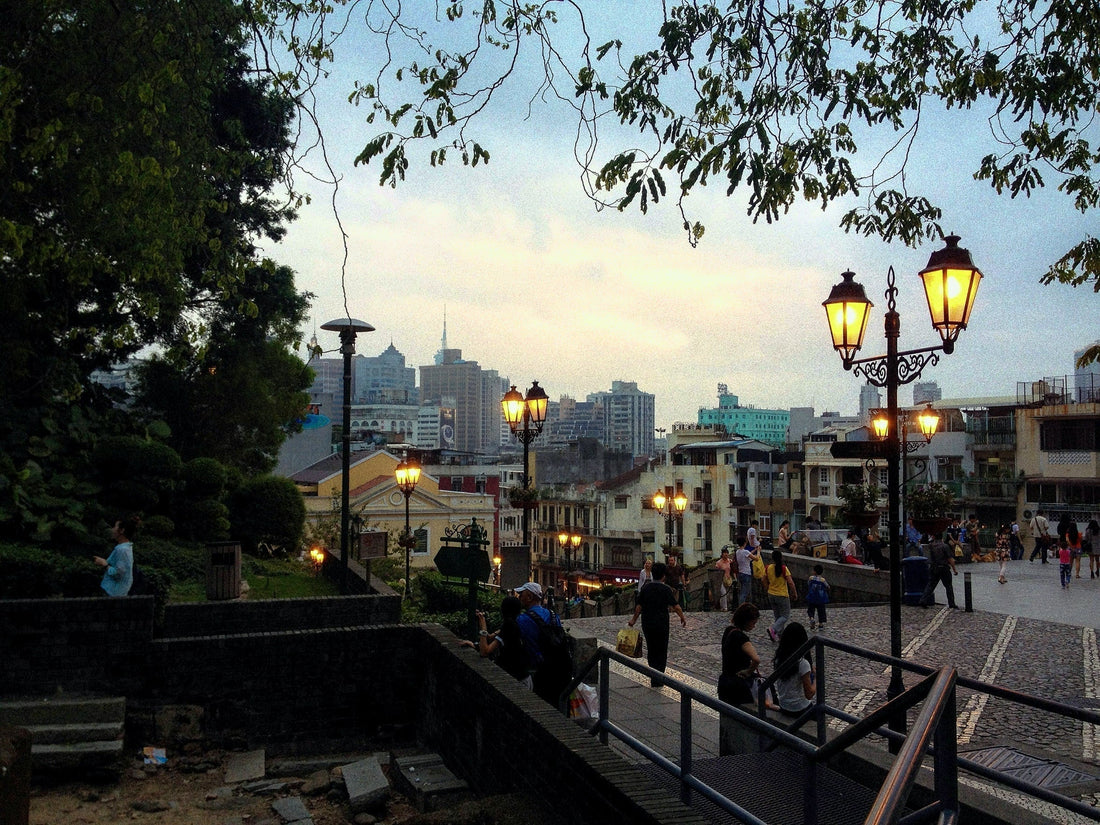
The ruins of St. Paul's College encompass the "Ruins of St. Paul's," the forecourt, and the stone stairs.
Translation Work as a Vanguard
As the first stop for Catholicism entering the Far East, the renowned Jesuit missionary Matteo Ricci arrived in Macau and first translated Catholic concepts into Chinese, choosing "天主" (Tiānzhǔ, Lord of Heaven) to refer to the Christian God. One explanation suggests this choice aligned with the Confucian concept of "天" (Tiān, Heaven) and was thus readily accepted by Chinese literati, while the initial choice of "上帝" (Shàngdì, Supreme Emperor) might have caused confusion with traditional Chinese pantheism or ancestor worship. Ricci conceptualized terminology in Macau and later published "The True Meaning of the Lord of Heaven" in Beijing in 1603, elaborating on his rationale. Macau, serving as a primary missionary base, supported translation and training through St. Paul's College (now the site of the "Ruins of St. Paul's"), founded in 1594, laying the groundwork for publishing.
St. Paul's College, as the first Western-style university in China, cultivated a large number of bilingual scholars, indirectly supporting the preparation for publishing. It gathered many European missionaries and Chinese scholars, providing linguistic and cultural training, and served not only for theological discussions but also as a place for cultural exchange. Professor Tang Kai-jian, an emeritus professor of history at the University of Macau, in his paper "The Relationship Between Macau and the Spread of Catholicism in Mainland China during the Ming and Qing Dynasties," points out Macau's role as the starting point and an important base for translation, creating and standardizing things that had never appeared in China before. "靈魂" (Línghún) was used to express "soul" or "spirit"; "公教" (Gōngjiào), meaning universal church, was used to refer to "Catholicism," reflecting the original meaning of "catholic"; "洗禮" (Xǐlǐ, baptism), "堅振" (Jiānzhèn, confirmation), and "聖體" (Shèngtǐ, Eucharist) are all widely used today. After a brief stay in Macau, Ricci traveled north, eventually settling in Beijing, where he collaborated with literati such as Xu Guangqi to further integrate Western religious concepts into the Chinese linguistic context and spread the faith into China.

The front façade remains of St. Paul's College, commonly known as the "Ruins of St. Paul's."
A Base for Preserving Religious Tradition
The procession of the Image of the Suffering Christ, commonly known as "Way of the Cross," is particularly prevalent in Southern European regions. Its appearance in Macau can be traced back to 1708. This two-day procession commemorates the Passion of Christ, parading through the streets of Macau, and is considered an important Catholic event in many parts of the world. Macau has always been a center of Catholicism in Asia, ensuring the continuation of this tradition and providing a unique space. After the Diocese of Macau was established in 1576, it was responsible for overseeing Catholic affairs in China, Japan, and Southeast Asia. Missionaries used Macau as a base to secretly enter China and Japan for evangelization. The Qing Dynasty's prohibition of Catholicism stemmed from the Pope's ban on Chinese Catholics participating in Confucian ancestor worship in 1704, which led to the "Rites Controversy." During the Yongzheng Emperor's reign, missionary work was completely forbidden, and European missionaries found proselytizing in China faced the death penalty. However, as a Portuguese colony, Macau was not subject to Qing rule and became a sanctuary for believers.

The Fortress of São Paulo is located on Mount Hill, with a statue of the Virgin Mary at its entrance.
The prohibition of Catholicism in Japan began with Toyotomi Hideyoshi's "Expulsion Edict" in 1587, predating the Qing Dynasty's ban in 1724 by nearly three hundred years. This policy led to torture and execution for Christians. Macau became a refuge for missionaries expelled by the shogunate. During Japan's isolation period, religious orders such as the Jesuits, Franciscans, and Dominicans gathered in Macau to plan secret entries into Japan or other regions. Approximately four hundred Japanese Catholics exiled to Macau after the Shimabara Rebellion settled in Bairro da Barreira, integrating into the local Catholic community and participating in activities such as the St. Augustine's Church procession. The crypt beneath St. Paul's Church (now the Museum of Sacred Art and Crypt at the "Ruins of St. Paul's") preserves the relics of martyrs, including the "Twenty-Six Martyrs" martyred in Nagasaki, Japan, in 1597, who, along with Vietnamese and Chinese martyrs, bear witness to Macau's Catholic history, now part of a World Heritage site.

Bairro da Barreira, located a street away from the rear of St. Paul's College, was part of the former St. Paul's Church and College complex, and is the most complete surviving village in the area.
According to Tang Kai-jian's paper, Macau, through St. Paul's College and St. Joseph's Seminary, trained a large number of Chinese missionaries, promoting the spread of Catholicism in China. These academic contributions are still widely used in the Chinese Catholic community today. The entire history of Catholicism in China is merely one page in the broader history of Macau. The major issues currently focused on and developed in Macau society are but a drop in the ocean compared to Macau's importance during the Age of Sail. Contemporary understanding of its historical role still needs to be deepened. "No wind, no city." Article 16 of "Macau Studies," "The Birth of the City of Macau," uses the aforementioned "City Charter" as an introduction to highlight Macau's important role as a transit port, from simple to profound. Finally, I would like to conclude with a quote from scholar Chan Ka-in's concluding remarks: You discover that this place called Macau is never just a silent dot on the world map, but a knot that weaves a world history spanning across time and space.
The size of a place does not limit imagination; only knowledge does.