
The Birth and Continuation of Local Culture from Community Writing
In Hong Kong, there's a small island called Peng Chau, just a half-hour ferry ride from Central. With an area of only 0.99 square kilometers and a population of less than seven thousand, it nurtures a unique cultural force. Kit and Myriem, who have lived on Peng Chau for many years, founded and published ISLANDERS, a publication combining a map and a magazine. Through their subtle observations and writings on island life, they explore the possibilities of sustainable living. These words and images are not just records of daily life but also an exploration of how local culture is born and perpetuated.

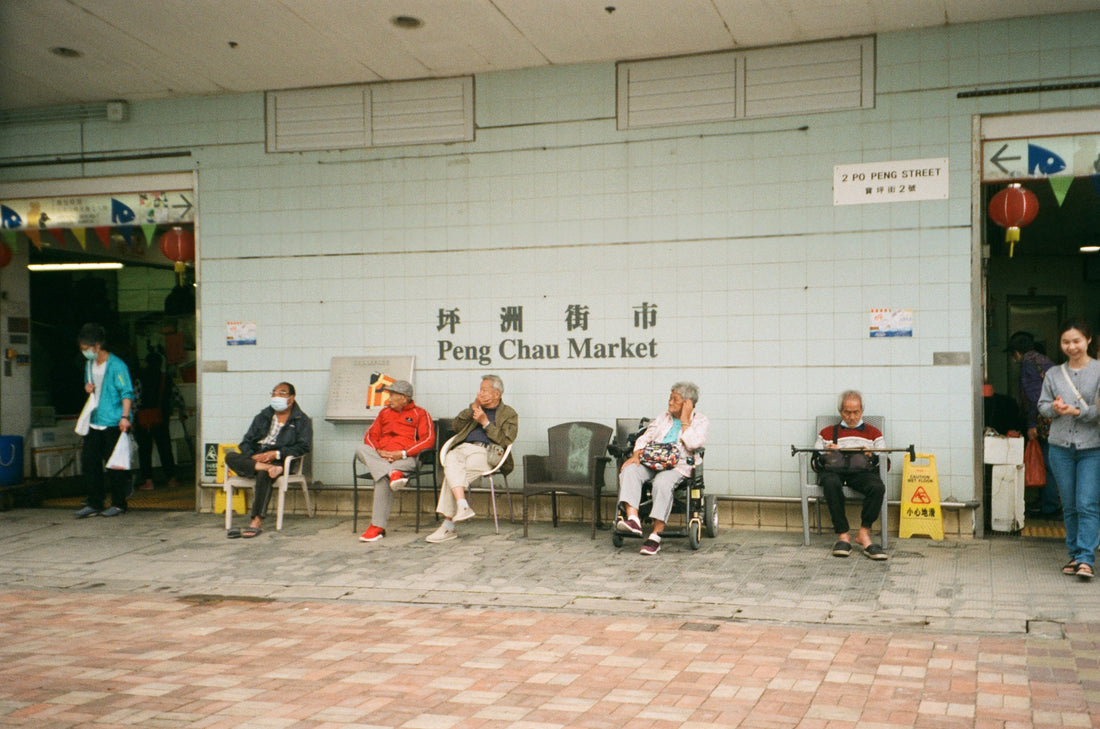
I once visited Peng Chau, and this small island felt very welcoming. The distance between people was shortened; whether residents or lazy cats and dogs, everyone seemed to leave an indispensable footprint in each other's lives. I can feel this in every issue of ISLANDERS.

In "The Social Life of Small Urban Spaces," American urbanist William Whyte said, "People like to sit where there are places for them to sit." This means people always find their own space in public areas, even before designers do. Peng Chau's community design is an example of residents spontaneously creating their own living spaces.

The first issue of ISLANDERS, "Organic Spaces," discussed the island's public spaces and the seemingly randomly placed chairs. To outsiders, these chairs might just look haphazardly arranged, but for Peng Chau residents, each chair has its own origin and story. These chairs evolved from disorder into community gathering spaces. Residents even collaborated to build an outdoor gym with a "panoramic sea view." It feels like Peng Chau residents are not just users of space but also community designers, collectively creating a connected community that serves as a place for people to live, interact, and participate.

The second issue, "Abundant Land," talks about Peng Chau's natural resources. Fruits like papayas, bananas, and jackfruits are not only sources of food on the island but also symbols of exchange and sharing among community members. If there's too much to eat, it's shared with neighbors or exchanged for other agricultural products. This way of life has formed Peng Chau's "sharing" culture, which not only nourishes material life but also strengthens emotional bonds within the community. The beauty and strength of a community truly come from its internal order, an order not imposed by designers but created by the people themselves.

The third issue, "Local Life," interprets Peng Chau's cultural symbols through discussions about T-shirts representing various festive activities on the island. These T-shirts are not just souvenirs but expressions of residents' emotional connections and a form of identity.

The fourth issue, "Self-Sufficient Floating City," explored the economic ecosystem of the island's shops, showing how Peng Chau achieves economic sustainability through self-adjustment and cooperation within limited resources.


These few issues of the zine, every word and every photo, not only introduce the way of life in Peng Chau but also convey the genuine communication and connection between the creators and the residents. They document local life and interpret how people and space coexist.
In comparison, Macau is also an island, much larger than Peng Chau, yet its community's public spaces and facilities are insufficient to foster deep connections among people. The sense of community is relatively weak, and there's a lack of people dedicated to community building. But there are always exceptions. I recall when Geng Geng San Yat was still in the St. Lazarus Parish, a small French restaurant nearby spontaneously invited a designer to create a walking map for people to pick up, featuring and introducing characteristic small shops in the area. Although just a simple booklet, it effectively connected the local business community. If Macau had more publications like ISLANDERS, it might better inspire residents to care about their communities and ignite more local spirit and sentiment.

"A Weekend Guide to St. Lazarus Parish", © Anne Nung Lui
As Japanese renowned community designer Ryo Yamazaki's design philosophy states, "The focus of community design is not merely architectural or spatial planning, but the interaction among people." Peng Chau's story tells us that when people begin to write about their communities and record those seemingly small details of life, these writings become the cornerstone of culture, implicitly continuing that intrinsic local spirit.