
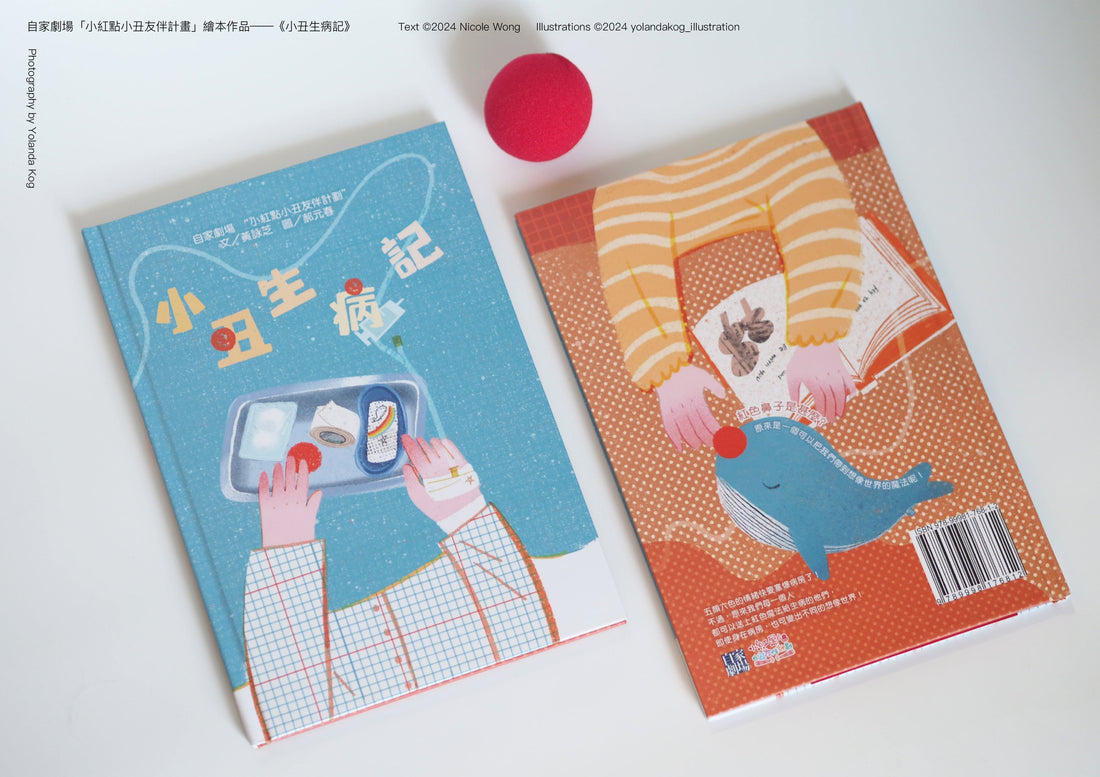
An Introduction to "The Clown Who Fell Ill": Anchoring and Dialoguing Life Situations
How much potential power do sick children have to respond to and give back to the world?
The answer is... infinite.
Once, during a general education course in medical school called "Life and Death from a Medical Perspective," Professor Chao Ke-shi shared an image: a middle-aged patient, having just completed chemotherapy, was wheeled out of the ward. He groaned in pain in the waiting room for a long time. Then, from the bed next to him, a small hand reached out and silently held the hand of the middle-aged man. The scene slowly grew quiet. This little "senior" who had also just undergone chemotherapy, expressed "I understand you, I know" with a single action.
"The Clown's Illness" is what the Red Dot Clowns of Macau witnessed during their many years of service in pediatric wards. The title of this book is quite unique; "clown" doesn't just mean a Red Nose Doctor, but someone who accompanies you through all the experiences of illness. The indescribable fears, physical pain, and low spirits associated with illness are all named in this book. On the market, we can find emotional picture books that help children name their emotions. Once emotions are named, children know what's happening to them and gain a sense of security. "The Clown's Illness" uses blue, purple, red, green, and black to illustrate several stages of medical experiences for young readers. The text is almost at the same level as the children, allowing them to express their discomfort. In the process of "venting," they also learn the honesty of expression. Regarding illness, it's not just about simple endurance; there's more space for emotional dialogue, focusing on the health of internal emotions.


While reading "The Clown's Illness," I burrowed into the entire book as if it were a "blanket tunnel." What the Red Noses do is often accompany children, families, and medical teams. It's not just about alleviating or providing a joyful atmosphere in the medical setting; another part is "belief." Children are like small animals that grow stronger with dreams. The picture book is full of messages that "believe in children." These single colors, representing various pains, collide and restore the imagination that rightfully belongs to children. For these "capable" children, a world where doctors and patients thrive together is not just an imagined blueprint but a real, existing world.
