Peculiarly browsing with an ulterior motive – a Chinese "independent comic" with a standard ISBN
Independent comics go by many names and are hard to define: alternative comics, avant-garde comics, underground comics, and so on. They are creations that break free from the shackles of the commercial market, full of unique visuals, rebelliousness, and experimentation.
In China, any book published without an official International Standard Book Number (ISBN) is, in principle, considered an illegal publication. The term "independent publishing" seems to have long deviated from the mainstream. Private Experience: SC Comic Special (hereinafter referred to as SC, an abbreviation for Special Comix) is a rare product that manages to navigate between the two. Jointly published by "Post Wave" and "Hunan Fine Arts Publishing House," it represents a kind of compromise. While it has the backing of large publishers, it can also be regarded as a collection of personal comics in spirit, published from a relatively pure author's perspective, reflecting a rare balance within the system.
The entire book is divided into nine different chapters, collecting a total of 29 comic works from 26 authors. According to the introduction, most of them do not work as full-time comic artists or illustrators.

Monkey Club by TKL
Driving the story with emotion
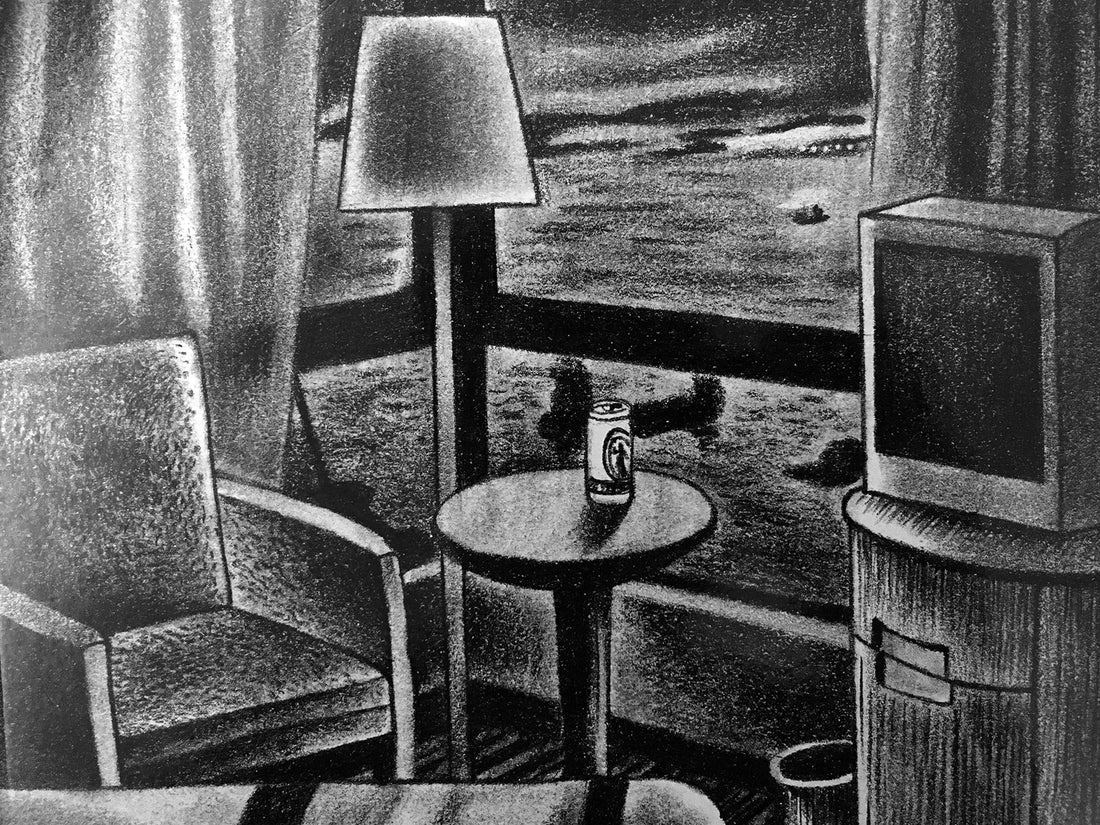
In comic creation, storytelling is a crucial element. Compared to commercial comics with strict narrative requirements, independent comics rely heavily on emotion and resonance to drive the narrative. Ultimately, to attract readers, even with a more subdued approach, a storyline or emotional impact needs to create an atmosphere. In the "Stroll" chapter, South Park and Cat Man subtly convey the nostalgia of returning to one's hometown, that feeling of "still being a youth upon return." Goodbye Kid stands out with its excellent art style, where the pencil drawings layer tension into the story.

South Park by gantea

Cat Man by Zuoma

Goodbye Kid by A Se (Duo Xi)
Expressing social views through metaphor and fantasy
Comics are a medium, and viewpoint is the spirit of independent creation. They can be used to articulate one's life philosophies or opinions on certain matters, and these often appear within them. While viewing, I couldn't help but associate them with real society, directly projecting the current state of Chinese society onto them. The authors must be hiding what they want to say within the stories, right? Ostrich Man's Utopia, just by its title, already invites multiple layers of interpretation, while Smoky Cave happens to complement it, creating a realm unique to free independent comics, existing between reality, memory, imagination, and the actual world.

Ostrich Man's Utopia by Ann Xiao

Smoky Cave by Pigao
Experimenting for realization
Some works are inevitably difficult to interpret in terms of their direction of expression. This could be to achieve a certain form, explore market reactions, or purely create with an unconventional mindset, prioritizing feeling... Regardless of the intention, anything worth savoring is precious. "Experimentation" is always honest and timeless. The inexplicable nature of The Backyard is puzzling yet provides space and time, with all random events resembling a glimpse into hyper-real life.

The Backyard by Xiaolonghua
Finding freedom within limits
SC seems like an eruption; digesting nearly 540 pages in one go is a bit overwhelming. Just holding it, I found it much heavier than a Bible—I struggle to define whether this is a "just-so-happened-to-be-here" publication or if independent publishing in China is genuinely taking root. It's somewhat disappointing that I don't see the adult themes, gore, violence, or direct attacks on society often found in independent comics. However, in a society characterized by self-restraint, fragmentation, and numerous limitations, ideas often emerge unconsciously and silently… For those who don't want to or can't conform, a space for shared breathing exists.
-