Using culture to profile the era, reclaiming the power to write about Macao
Who can define the classification of an era's collective portrait? We can get a glimpse from the written words of that time. From childhood, we were taught through traditional education how to understand the world, that the world only needed to be described chronologically. That smooth linear narrative always left people bewildered, because it entirely overlooked the peripheral details of the world within that era. At such times, literature and art are needed to fill these gaps. I believe this is an indispensable part of helping everyone understand the world and engage in dialogue. From numerous works, we can reconstruct the social landscape, daily life, and ideologies of the time. Just as you can understand ancient Greece through Aristotle's writings, it's not a cold, historical account, but rather through the popular tragic plays of the time as a medium, imagining the humanistic landscape of that era within the rhythm of "Poetics."
However, almost all those writing about Macao today are not Macanese. We are powerless to write our own culture.
I don't know if this unique situation is exclusive to Macao. For a long time, we've relied on external media to tell us everything we should know about what's happening around us. External writers annotate our city, beautifully produced special features tell us about the uniqueness of spicy fish buns, and numerous social media posts redefine Macao's specialty dishes. Celebrities recount local history that is slowly being disconnected from its roots, while the people of this city become tourists observing things, and rather unenthusiastically at that. We lack accessible and engaging popular cultural readings and media, and those who live here have no interest in their accustomed culture and landscape. Instead, everything has to be evaluated through the consumption and gaze of others.

Outer Harbour reclamation area. (Reprinted from Li Rui Fen's "Another Perspective")
Against this contemporary backdrop, the works of the late local artist Li Rui Fen appear even more precious. In recent years, Beacon Publishing House has released three collections of essays and one photography book, almost encompassing all the casual writings he published in newspapers and magazines during his lifetime. These span from the Macao-Portuguese era in the 1990s, across the handover of sovereignty, until his illness in the new millennium. He provided a sidelong glance at the era through essays and photography, covering themes such as culture, life, art, and commentary.
Reading an article always carries a double meaning. As an artist, Li Rui Fen's critique of cultural policy reflected the chaos of Macao's early post-handover period, when the governing system was still in its exploratory phase. When he immersed himself in a prominent cultural event, one could see the struggle between power and culture. In his concise articles, one could observe and contemplate the city. As times change and situations evolve, the writer may have been unintentional, but the reader is attentive. The sense of change feels like three hundred years have passed, as if wandering between fiction and reality, immersed in both art and life. Macao has far too few essays and prose pieces with a cultural background. These should serve as an introduction, and there should be more than just one or two people writing about the great era. Different articles should be cracks of varying sizes and shapes, through which we look out. The closer we get, the wider the perspective we gain on the era.

The three essay collections by Li Rui Fen published by Beacon Publishing House: "Still Not Enough" (right), "Treating Guests with Culture," and "Is Everything All Right?".

(Inner pages reprinted from Li Rui Fen's "Treating Guests with Culture")

(Inner pages reprinted from Li Rui Fen's "Is Everything All Right?")
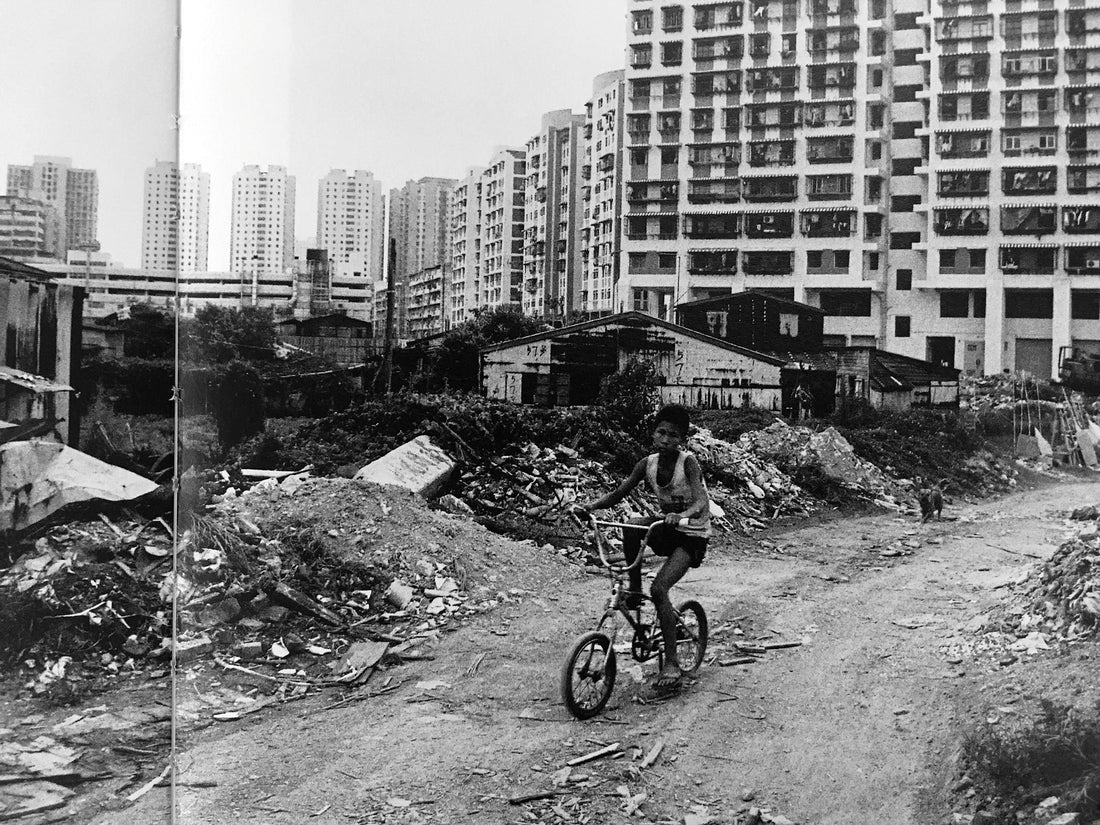
We can get lost in the space of memory, sometimes unable to find our bearings, but photography allows us to. Macao developed at an extremely rapid pace, and Li Rui Fen happened to fill the extremely brief gaps in between, solidly documenting the dusty developmental landscape of that time, preserving the transitional period eternally. Why is this so rare? Because "transition" is a despised word; all cities undergoing development are most easily overlooked. Old things are waiting to be erased, and new ones have not yet appeared. These periods are chaotic, and the public is forced to silently endure, waiting for the mist to clear like a dream. The vegetable gardens of the old racecourse in the northern district, the subdivided flats in Zheng Family House, the last night of Guan Nan Tea House, the demolition of the wooden shantytown in Green Island, the last shipbuilding orders at Coloane Lai Chi Vun, Hengqin still being a fishing village across the water... Freezing to watch the eerie construction sites during the city's "transition." Today, old photos are abundant, nostalgia is cheaply sold, and realistic styles carry strong imprints of the era. Li Rui Fen reminds us, who are now well-cared for, that documentation is not nostalgia; it generates "another option" within the system, offering a proposal for viewing the city beyond appearances. We are not ignorant of anything apart from the "old."

"Another Perspective" by Li Rui Fen, published by Beacon Publishing House.

Since 1989, the Macao-Portuguese government began the demolition plan for the wooden shantytown in Green Island, which was fully completed by 2010. (Reprinted from Li Rui Fen's "Another Perspective")

Hengqin, separated from Macao by a stretch of water, has seen its indigenous residents' way of life completely transformed due to national development. (Reprinted from Li Rui Fen's "Another Perspective")
People in every era believe themselves to be modern, living in "the best of times, the worst of times." Reality is often cruel, so people shy away from confronting it directly. Literature uses an ambiguous approach to touch upon it, resisting, believing, experimenting, abstracting, providing another piece of the puzzle in the pursuit of truth. Although fragmented, it at least illuminates a moment in the darkness, preventing people from falling.
-