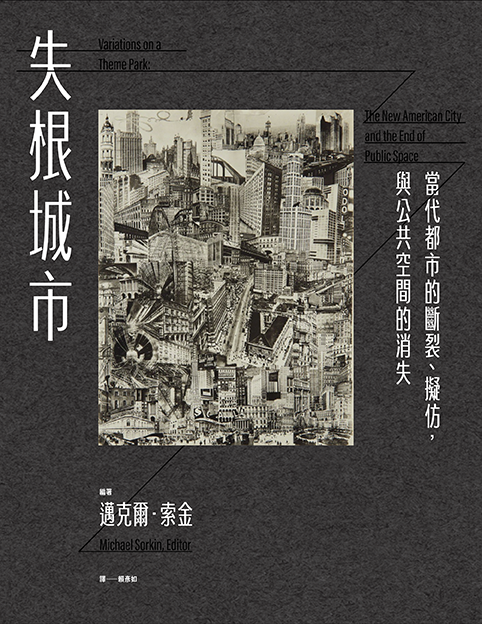

Rootless City: Rupture, Simulation, and the Disappearance of Public Space in the Contemporary Metropolis
Rootless City: Rupture, Simulation, and the Disappearance of Public Space in the Contemporary Metropolis
Couldn't load pickup availability
Cities, where people congregate, no longer exist for people.
Consequently, both space and people are at a loss.
Michael Sorkin, "the most outspoken conscience of American architecture," incisively analyzes the chaos of contemporary cities in this timeless classic.
Living in a city, have you ever felt like taking a break but had nowhere to sit? Have you ever revisited an old place only to feel lonely because the glossy streetscape couldn't evoke any memories? Have you ever wanted to talk to others but felt a hidden fear?
Cities were originally places where people naturally gathered. Why have they evolved to make the people within them feel immense pressure, bewilderment, and loneliness? Many have experienced such emotions, but find them difficult to articulate or cope with. The reasons for this were already pinpointed by renowned American architectural critic and urban planner Michael Sorkin in the 1990s. With his keen insight, he saw through the bustling neon lights of prosperous cities, realizing that cities were becoming hollowed out and nominal. He was the first to warn that "hollow cities" subtly impact people, draining emotions, memories, and interactions without them even realizing it. After its publication, this book tempered America's blind optimism about cities and became an essential classic for understanding contemporary spatial structures in the fields of architecture and urbanism.
Cities, as places where people converge, were once vibrant, free, and open, giving the impression of numerous opportunities, high population flow, and dynamic life, thus appearing free and open. However, at some point, the new face of contemporary cities has become vastly different from the past. Modern cities have become like theme parks, where the illusion of safety and pleasure conceals underlying oppression, exploitation, and inequality. Catalyzed by capitalism, private land ownership, defensiveness, and technology, cities have gradually become enclosed, exclusive, and characterized by extreme wealth disparity. Urban spaces segregate people, placing them in "appropriate" positions according to class, race, and assets, replacing the interaction and dynamism that public spaces within communities once provided with the fulfillment and desire for material wants. Architecture and landscapes are increasingly disconnected from their local context, creating spaces with lost meaning through "copy-and-paste" various venues, making it difficult for people to develop feelings and memories for their environment. Public spaces for interaction and encounter are also diminishing, causing people to become increasingly distant and estranged from each other, with loneliness shadowing them.
This phenomenon is ubiquitous. The facilities visible to people (pedestrian bridges, underpasses, shopping malls) and regions (Manhattan's "historic old streets," Silicon Valley's tech parks, Disneyland) all demonstrate how contemporary architecture isolates people and removes historical and cultural context. People living in this environment, where the sense of place has disappeared, can easily feel a lack of belonging. Consequently, even if the living environment is colorful and bright, the sounds are lively and pleasant, and goods are abundant, ultimately, when trust and contact disappear, we find it difficult to get along with others and with ourselves, becoming rootless people in rootless cities.
Sorkin gathered several highly representative scholars from urban studies in the U.S. and Canada to analyze cases from both countries within a clear conceptual framework. They elucidate how the disappearance of public spaces affects residents' ability to interact and how various visible urban facilities and glamorous venues eliminate public spaces. Today, the phenomena warned about in this book are no longer limited to the U.S. and Canada; they have spread to countless corners of the world through business models and information technology. The doomsday bell has rung. Although the subtle forces of the illusory city are not easily identifiable beneath the glamorous streetscapes of contemporary cities, which resemble theme parks, only by identifying them can we take the first step towards resistance.