

From Delinquents to Cool Kids: Taiwanese Tattoo Artists 1980-2020
From Delinquents to Cool Kids: Taiwanese Tattoo Artists 1980-2020
Couldn't load pickup availability
Skin also has its revolution! When the needle pierces the dermis and the pigment melts into the bloodstream, what remains is not just an eternal mark, but also a microcosm of a dramatic shift in societal values!
How did Taiwanese tattooing go from being a social taboo to gracing fashion magazines, becoming a trend people pursue? How have independent tattoo artists across the island over the past forty years built a clear ecosystem? "From Delinquents to Cool Kids: Taiwanese Tattoo Artists 1980-2020" is the first in-depth observation and illustrated book to untangle the evolution of the Taiwanese tattoo scene.
Author Chang Yu-Yin has written extensively in the arts and culture field for many years. In her youth, she witnessed the stigmatization of tattoo culture, and in her forties, she resolutely decided to let various tattoos adorn her skin. She looks back at the process of reconciling with her own body, delves into field research, converses with her younger self, and ultimately weaves a long scroll of social change through ten cross-generational interviews with tattoo artists and reflections.
This book will lead readers to glimpse the different techniques and styles that have emerged in Taiwanese tattooing across generations:
The Pain and Pleasure of Totems: From Underground Legends and Celebrity Fashion to Ultimate Service
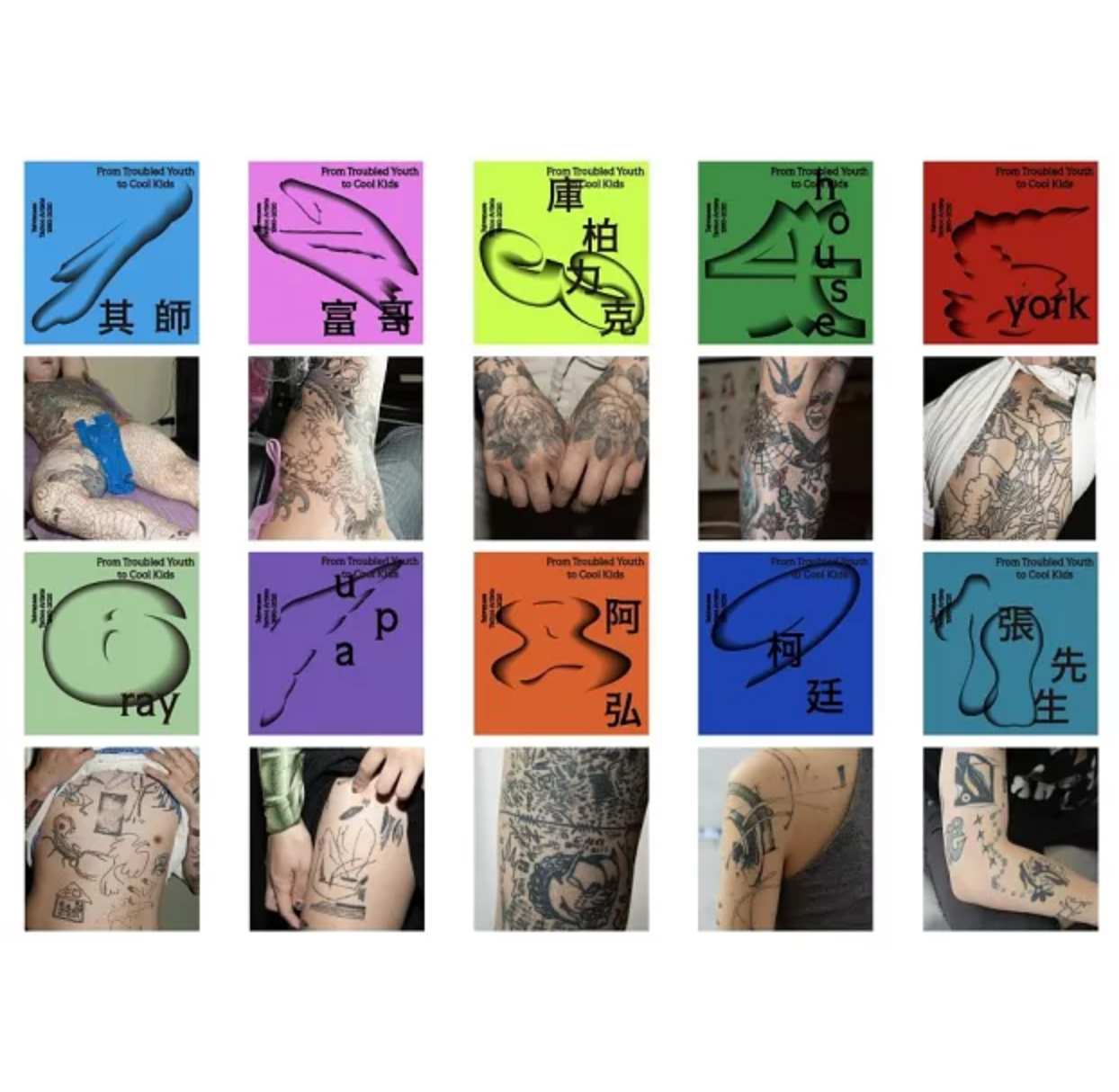
● In the era of "free braised pork rice": Return to the 1980s and see how pioneering masters, without transfer techniques, honed their inimitable tattooing skills, transforming what were once feared underworld markings into delicate Taiwanese craftsmanship.
● Tradition is timeless, trends need history: Master Fu, known by the honorific "Diao," showcases an early maker spirit by self-making equipment. Along with his tattoo artist sons and the works on celebrities Sunny Wang and baseball player Lin Yu-Min, traditional tattoos have graced fashion magazines, becoming a cross-generational fashion symbol.
● The ultimate, hard-to-book experience: Kubrick, who tattooed internet media personality Chi-chi 77, considers himself a craftsman. Inspired by manga artists, his work is known for exquisite detail, and he incorporates clients' experiences into the tattooing process, with appointments selling out instantly whenever they open.
Multiple Variations of American Style: Hardcore – Crossover – Arty Style
● The ultimate defense of old-school craftsmanship: House, the founder of "Coffin Cricket" with a philosophy background, rejects the excessive convenience brought by technology. He insists on using traditional coil machines and complex procedures, defending against the fast-foodization of imagery and history with classic American traditional styles.
● The universe of brand merchandising: York of "Solar Dragon Palace" is not content with merely painting on skin. Approaching it from a brand management perspective, he extends his totems to various co-branded merchandise, breaking the boundaries of traditional mediums.
● The premier brand for indie-style tattoos: Ray of "THEBAYSTUDIO" is self-taught. He believes creativity stems from muscle memory and excels at creating crude yet charming styles with simple lines and color blocks. Oh, and don't forget to look for the adorable white cat Apo during your tattoo session.
Contemporary Skin Art, a Fearless Torrent: Abstract, Bad Painting, Surrealism, Y2K
● Who says figuration is the only choice?: In an industry often dominated by masculinity, tattoo artist Upa insists on using needles to mimic painting strokes, organically arranging skin space to leave poetic abstract traces and bubbly textures. It turns out tattoos can also be an ethereal dream.
● Experimenting with Bad Painting in the shadows together: Ah-Hung from Hulu-tun, Taichung, prefers grayscale graffiti, noise, and cracked textures, using them to challenge the definition of refinement. In seemingly haphazard lines, he reveals a whimsical yet precise structure.
● Picking up a sketching blade to slice reality: Ke Ting, from an artistic family and educated in the UK, utilizes his profound sketching skills to delve into black-and-white realistic styles. He is adept at deconstructing and reassembling human figures and object images, creating unimaginable surreal illustrations.
● Adorn yourself with dazzling Y2K accessories: Mr. Chang, with a background in fashion design, keenly grasps Gen Z trends. He transforms elements like metal, ribbons, and cute pets into markings imbued with a cult aesthetic. In his hands, images are embedded into the skin like accessories.
"From Delinquents to Cool Kids: Taiwanese Tattoo Artists 1980-2020" not only records the stories of ten tattoo artists but also analyzes important industry issues: the transformation of the apprenticeship system, the changing functions of international exhibitions, the evolution of competition judging mechanisms, the reshaping of the entire ecosystem by social media, and even phenomena such as image theft and talent drain. We also get a glimpse into the daily life of each studio – revealing that these artisans are not aloof artists but flesh-and-blood ordinary people.
This book comprises 11 volumes, including the preface, with each volume's design reflecting the unique style of a tattoo artist. The overall binding was handled by the HOUTH team, known for creating "emotional visuals," whose designer Ho Wan-Chun was recently elected as a member of the International Graphic Alliance (AGI) in 2024. Most of the interview, work, and studio photos of the tattoo artists were taken by photographer Chen Chih-Hsien, whose trademark is capturing marginal life with a humorous and unpretentious lens.
Whether you are a tattoo artist who has been practicing for years, an aspiring tattoo artist, an enthusiast with existing tattoos, or simply interested in the development of subcultures, this book provides a clear framework for understanding Taiwanese tattoo culture. You will also further understand that what is etched onto the skin is never just a pattern, but Taiwan's history, and the steadfastness and hesitation of all actors as they contemplate the future.