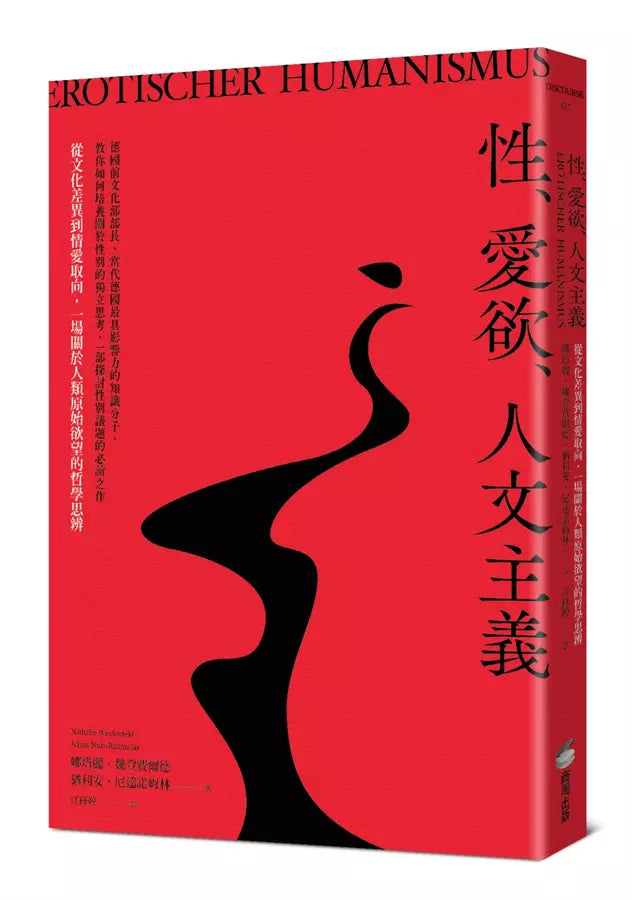

Sex, Eros, and Humanism: A Philosophical Reflection on Primal Human Desires, from Cultural Differences to Erotic Orientations
Sex, Eros, and Humanism: A Philosophical Reflection on Primal Human Desires, from Cultural Differences to Erotic Orientations
Couldn't load pickup availability
The former German Minister of Culture and one of Germany's most influential contemporary intellectuals teaches you how to cultivate independent thinking about gender – an essential read for exploring gender issues.
- Those who support gender justice must be prepared not only to question others' prejudices but also their own.
- Erotic humanism does not attempt to erase differences through assimilation to cultural norms; it embraces gender diversity and understands the complexity of human behavior.
- Erotic humanism advocates for moral standards, not moral censorship.
This book aims to explore the issue of gender relations (Geschlechterbeziehung) from a moral and philosophical perspective, taking "Erotic Humanism" as its basic stance. It argues that when we confront eroticism and gender, we should embrace humanity and humaneness, cooperation and inclusiveness, and reject various forms of role reductionism and stereotypes. "Humanism" here represents a friendly, optimistic view of humanity, emphasizing that people should equally consider freedom, responsibility, and respect, allowing everyone to shape their own lives and acknowledge their differences.
In recent years, Taiwanese society has become a leader in gender awareness in Asia. Issues ranging from discrimination and equality, eroticism and identity, to harassment and infringement, have continuously remained at the core of public discourse. However, even in Western societies, similar issues have not reached a consensus, and disputes and confrontations never cease – to what extent should quotas and opportunities for different genders in the workplace achieve equality? How do victims' narratives in the #MeToo movement affect relationships between sexes? Is eroticism synonymous with involuntary and exploitation, or can it itself be transformed into a power strategy? Does art enjoy absolute freedom, or should it be constrained by morality?
This book attempts to challenge and transcend the hidden prejudices of current genderism. It explores gender issues in daily life through fifteen different themes, using concise philosophical methods to analyze them, find the balance between individual autonomy and social norms, and provide a new interpretation of feminism and gender justice.