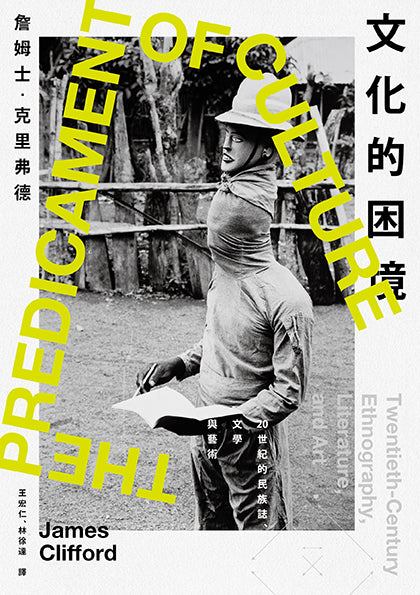

Cultural Impasse: Ethnography, Literature, and Art in the 20th Century
Cultural Impasse: Ethnography, Literature, and Art in the 20th Century
Couldn't load pickup availability
Who has the right to speak for an ethnic group?
What is the "authenticity" of a culture?
"Cultural" differences are not only a matter of essence but also of power and rhetoric.
In the autumn of 1977, at the U.S. Federal Court in Boston, a group of Wampanoag descendants living in Mashpee "Cape Cod's Indian Town" were asked to prove their tribal identity in court in order to reclaim their ancestors' lost land. These Native Americans, labeled as Massachusetts citizens in modern times, were required to prove that their tribe had existed since the 17th century and had continuously lived on that land. However, the lives of these Native Americans had already intertwined with the English Puritans who landed at Plymouth Harbor, the local dialect-speaking residents of Massachusetts, and even other Native Americans, leading to significant changes.
Were these 20th-century Native Americans, standing in court, still the same Indians as in the 17th century? Or perhaps we should ask: when rights/power are involved, how should so-called ethnic characteristics be expressed or highlighted? In court, besides the Native Americans and the white people they lived alongside, historians, anthropologists, and sociologists also testified as expert witnesses. Concepts such as "tribe," "culture," "identity," "assimilation," "ethnicity," "politics," and "community" were all brought before the court for deliberation.