
1
/
of
1
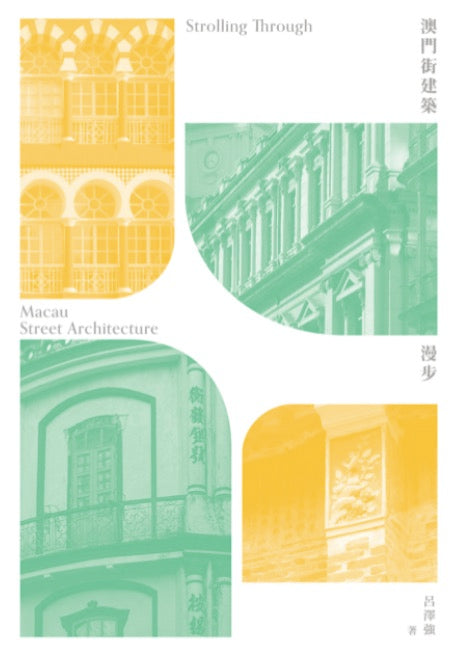
Walking the Streets of Macao's Architecture
Walking the Streets of Macao's Architecture
Regular price
MOP$193.00
Regular price
MOP$193.00
Sale price
MOP$193.00
Unit price
/
per
Couldn't load pickup availability
Compared to Hong Kong, Macau is very small; you can walk the main roads from north to south in less than an hour. Although the older generation often refers to this small city as "Macau Street," many distinctive buildings are preserved in its nooks and crannies.
The previous work, "Exploring the Aesthetics of Macanese Architecture," introduced architectural styles chronologically. However, this classification has certain limitations, excluding many distinctive buildings whose aesthetics and styles are hard to define, or whose designers are unknown. This is especially common in Macau, where diverse cultures coexist.
Therefore, this book uses "streets" as its narrative backbone, focusing on the Macau Peninsula. Starting from the Ruins of St. Paul's, it selects nine routes that reflect the city's development, introducing nearly 70 everyday buildings, both Chinese and Western, old and new, that even Macau residents might overlook. Examples include "Tong Lau" (Chinese tenements) and pawnshops from the late Qing Dynasty and early Republic era, the Portuguese kindergarten spanning the road next to Guia Hill Tunnel, and even a high-rise residential building on Avenida de Almeida Ribeiro with its old facade preserved – all worth discovering.
Besides Macanese architecture, this book also aims to introduce the development history of related streets and neighborhoods, sparking readers' interest. Following the maps in the book, from "Cidade do Nome de Deus" (City of the Name of God) to "Bairro de Mong Há" (Mong Há Village), from Nam Van to Porto Interior (Inner Harbour), readers will unwittingly explore more than half of the Macau Peninsula, gaining a deeper understanding of Macau's urban essence and unique characteristics where Eastern and Western cultures intertwine.