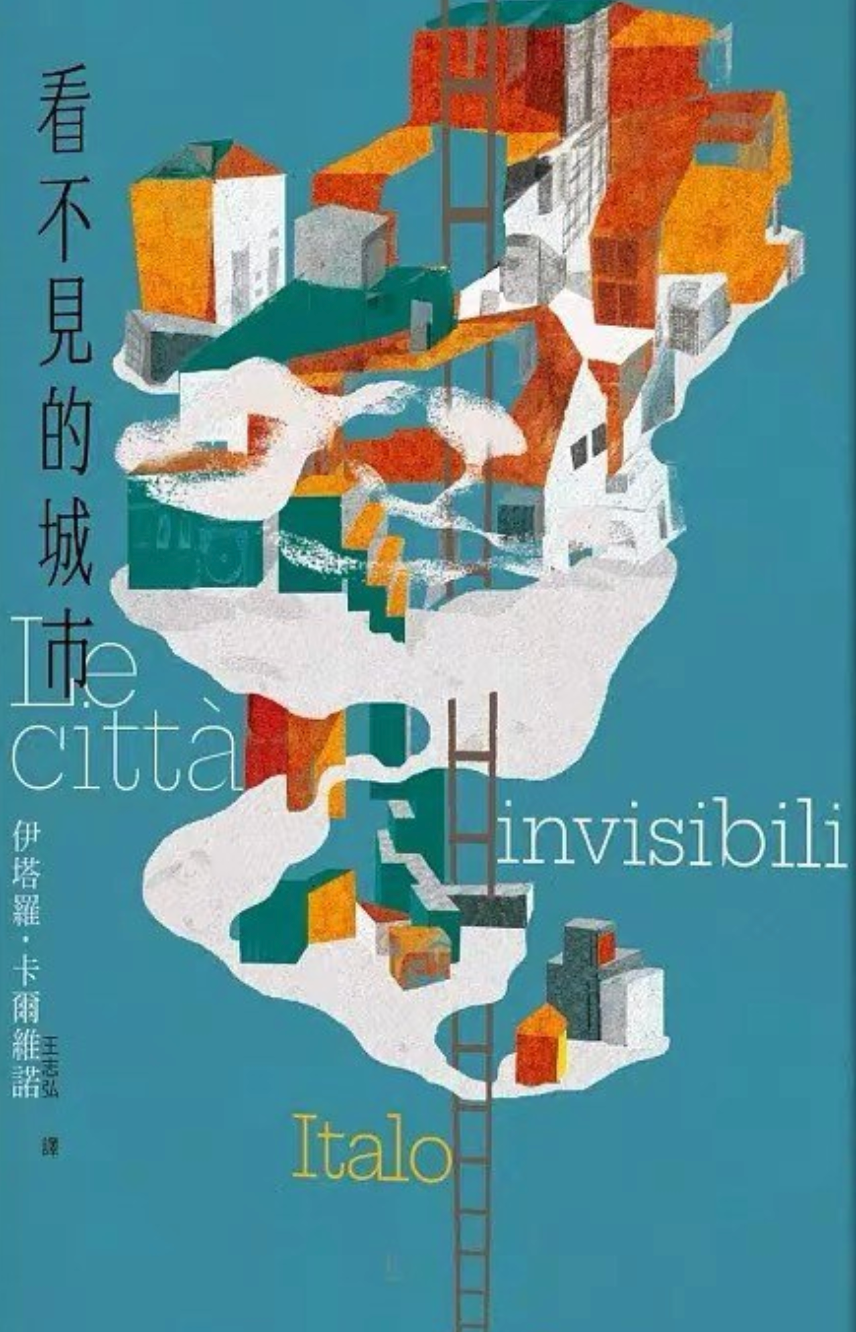

Invisible Cities (Traditional Chinese Edition: 20th Anniversary New Edition)
Invisible Cities (Traditional Chinese Edition: 20th Anniversary New Edition)
Couldn't load pickup availability
We set off to reach an invisible city.
The city, by implication, is the overall image of human civilization.
Calvino's timeless masterpiece, renowned in the world of literature.
The aging Mongol Emperor Kublai Khan strolls through his garden, listening intently as the Venetian Marco Polo describes his travels and observations in various cities. Marco Polo's descriptions evoke eleven themes that form a complex and ever-changing urban tapestry: memory, desire, signs, trade, thin cities, eyes, names, death, sky, continuous cities, and hidden cities. The author uses cities to explore observations on the human condition, with each city serving as a parable. The dialogue between the two men, moving from concrete scenes to abstract thought, initiates a discussion about modern cities. Unbeknownst to them, space and the city itself become less important than the imagination they inspire, offering readers an unparalleled reading experience.
"Invisible Cities" collects fifty-five cities, structured into nine chapters featuring eleven different themes, forms, and even names, composing a comprehensive textual map. Each chapter begins with a dialogue between Marco Polo and Kublai Khan, forming a multifaceted chessboard along all its edges. Readers can join the game at any point, traversing the chapters or stepping outside the text to hyperlink their own experiences and desires.
Since its publication in 1972, this novel centered on "cities" has demonstrated a diversity and interdisciplinary writing style that has made it a leader in postmodern fiction. It boldly breaks the boundaries between travelogue and fiction, memory and representation, literature and discourse, history and politics, reality and imagination. From its form to its content, its formal appeal to structuralism and semiotics has captivated readers. Its astonishing conclusions remain fresh today: "invisibility" is the space reserved for unknown cities and the beginning of survival.
Lao Tzu said, "The greatest form has no shape." Marco Polo's city reports and Kublai Khan's active responses increasingly reflect the city's infinite and ineffable nature; the more one strives to grasp the whole picture, the more open-minded one becomes.
"From your voice, I hear the invisible reasons that make cities live; perhaps, through these reasons, cities that have died will be resurrected."
"What is the city for us today? I believe I wrote something that is like the last love poem dedicated to the city at a time when it is becoming increasingly difficult to live in cities as cities. Perhaps we are approaching a moment of crisis in urban life, and 'Invisible Cities' is a dream that has grown from the heart of these unlivable cities." – Italo Calvino