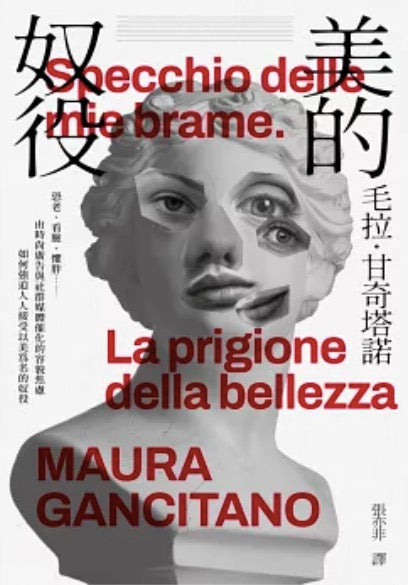

The Slavery of Beauty: How Ageism, Lookism, and Fatphobia—fueled by fashion advertisements and social media—compel everyone to accept the slavery disguised as beauty.
The Slavery of Beauty: How Ageism, Lookism, and Fatphobia—fueled by fashion advertisements and social media—compel everyone to accept the slavery disguised as beauty.
Couldn't load pickup availability
The enslavement of beauty is feeling ashamed of one's body, changing it to conform to judgmental gazes—
"Become a better, more perfect version, an object of others' envy. Then I can love myself."
◤When did this notion begin, that if I become thinner, dress better, learn to do makeup, I will be happy...?◢
Today, "beauty" is a set of rules to be followed, dictating specific ways of dressing, speaking, and acting. This is not purely an aesthetic issue, but an operation of power. To view "beauty" as an objectively natural existence is a modern superstition. In fact, diverse aesthetics and sensibilities have always coexisted, and the worship of beauty only became a cage in recent times. As women gradually broke free from shackles in education, economy, and politics, the norms for women's appearance became increasingly rigid and suffocating, forcing everyone to pursue unattainable perfection. This book explores how "beauty" has become a tool to control people's bodies, minds, and life choices. This control is particularly evident in women, but the situation is becoming increasingly similar for men.
The author of this book, Maura Gancitano, is a philosopher and social commentator. She observes that the concept of beauty has changed meaning with the shifts in capitalism, transforming from a subtle experience into a standardized model that occupies people's time and thoughts, and creates feelings of inadequacy, guilt, and sin. Ironically, we live in an era where most people are finally free, yet only those who meet specific conditions are deemed worthy of value and dignity. "Beauty standards" are disseminated through media such as photography, advertising, fashion magazines, and film and television to promote standardized beauty, and they use clothing sizes and consumerism to brainwash the public: "becoming beautiful" is an inescapable responsibility.
On this issue, the author offers sharp observations and insights:
⊙ The background for the emergence of the "myth of beauty" was an era of rapid development in mass communication, transportation technology, and urbanization, giving birth to mass society. During this period, the middle class began to express their aesthetic tastes, the body became an object of cognition, harsh standards were used to judge beauty and ugliness, and a singular aesthetic view gradually formed.
⊙ The insidious nature of the myth of beauty: it is hidden, invisible, and parasitic in our thoughts. Advertising tells everyone they can become better and more beautiful, even co-opting the language of "body positivity" and the concept of "self-care." Advertising portrays a vision of a good life, but also creates anxiety, as if not being beautiful means not being worthy of a good life.
⊙ The author was once offered a dark circle lightening treatment, and despite seeing through the commercial logic behind it, her mood was still affected upon returning home. The contemporary "religion of beauty" offers various solutions, including makeup, medical aesthetics, and beauty treatments, tempting people to consume, but the effects are generally superficial and may again cause dissatisfaction, attracting repeat customers.
⊙ Mass society's imagination of beauty has gradually become rigid: women cannot age, cannot become ugly, cannot become fat, and should hide parts that do not meet standards. 20th-century films even taught women how to walk and how to interact with men. The result is that, across all professions, all women view "becoming beautiful" as the supreme task.
⊙ With the prevalence of social media, everyone's self-perception and sensitivity to their image have greatly increased. It is estimated that Instagram users upload approximately 100 million photos daily; no generation has had to face such a large amount of visual stimulation; "self-objectification" is occurring—the sculpting of one's self-image and how to present oneself under the gaze of others, all of which give rise to stress and anxiety.
This book gradually deconstructs the myth of "beauty" and, supported by philosophy, anthropology, social psychology, and statistics, reveals how this coercive, singular aesthetic standard hinders us from listening to and following our true desires, making it difficult to live freely. Ultimately, the author also discusses what true beauty is, whether there is a consensus on beauty, and attempts to find a way for modern people to cope within the social framework of "having to be beautiful."