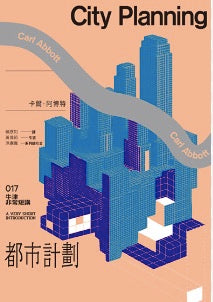

Urban Planning: Oxford Very Short Lecture 017
Urban Planning: Oxford Very Short Lecture 017
Couldn't load pickup availability
According to research, 60% of humanity will live in cities by 2030. Cities are the most spectacular man-made structures on Earth.
For a long time, humans have meticulously arranged their settlements, fostering a sense of collective identity while also attempting to resolve conflicts within communities. Furthermore, cities themselves are part of the natural environment. Every infrastructure project, every choice of land use, rewrites the relationship between humans and nature.
As urban life becomes increasingly complex, urban planning has evolved into a specialized field.
This book moves from small spatial scales to large spatial scales, including streets and buildings, suburbs, downtown areas, and even megacities and metropolitan areas. When discussing the nature of space, it progresses from Euclidean geometric space to the relational perspective that emerged in the 1990s. It also introduces the imaginations and layouts of planning practitioners regarding the relationships between cities within a region, and between urban and rural areas, as well as the profound impact of these layouts on local development.
The author highlights new challenges facing urban planning:
● How do we address the connection between city centers and peripheral towns through transportation issues?
● How do city centers confront decline and embrace the challenges of urban renewal?
● How do planners and politicians arrange natural elements within cities? And how do they address the losses caused by extreme natural disasters?