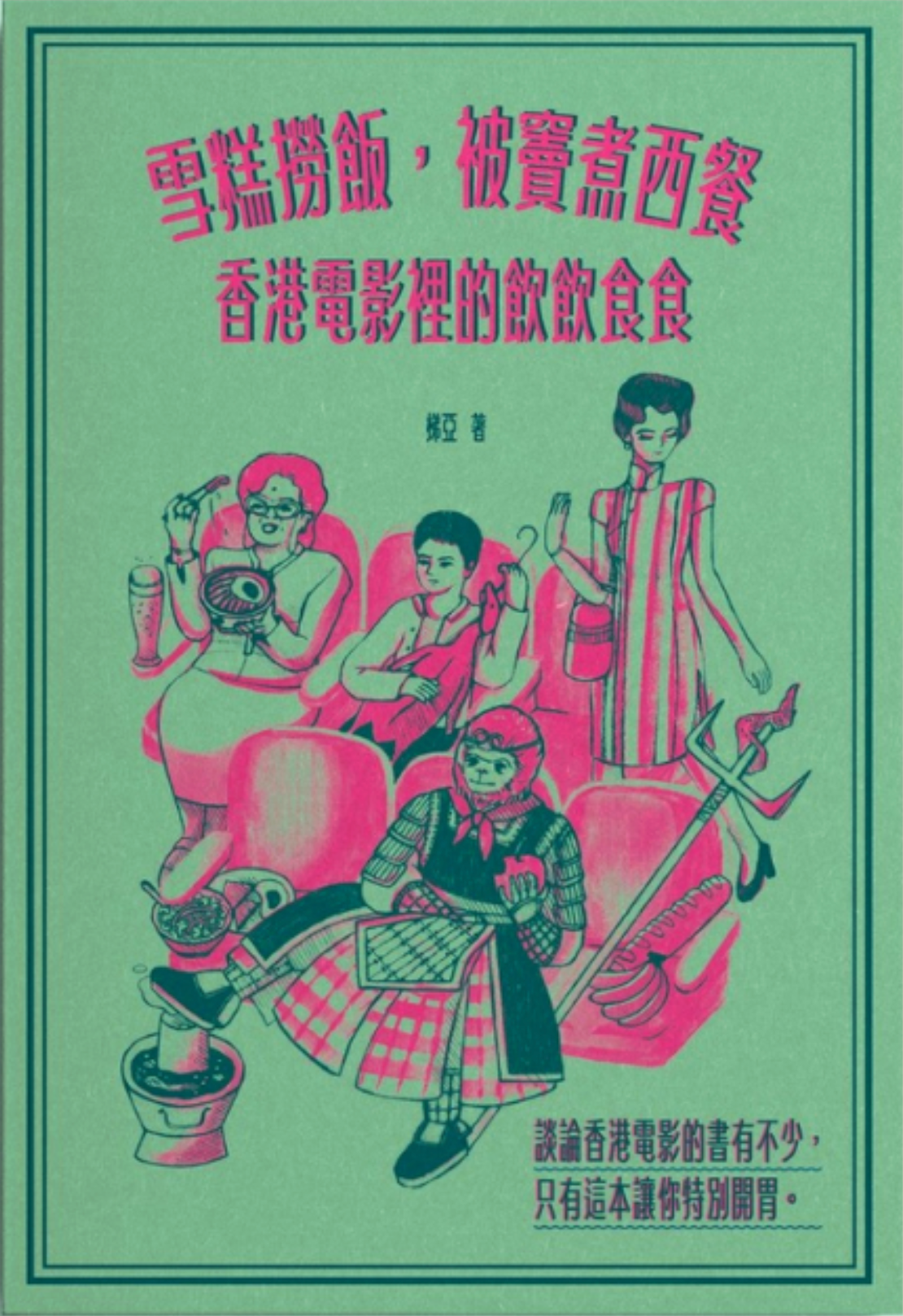

Ice cream with rice, and cooking Western food in a cramped room: food and drink in Hong Kong cinema
Ice cream with rice, and cooking Western food in a cramped room: food and drink in Hong Kong cinema
Couldn't load pickup availability
A culinary homage to Hong Kong cinema
Remembering a city through its food
You may have watched many Hong Kong movies, but have you ever paid attention to the food and drink scenes within them?
Did you know:
▎The first film made by a Hong Konger was already connected to "eating", and its title was even about a type of food?
▎Roast duck and roast goose are both very popular, but which one appears more often in Hong Kong films?
▎What do triad gangs usually eat at their gatherings in Hong Kong movies?
▎In "Our Time Will Come", why did Eddie Peng specifically bring eyebrow bean cakes for Zhou Xun?
▎Many people often eat "dry-fried beef ho fun", but "wet-fried beef ho fun" was actually the original. Have you tried it?
▎Someone almost lost their life just to properly enjoy a box of char siu chicken rice? Which movie was that?
▎There are countless hangover remedies in Hong Kong films. Which ones have you tried?
▎What was the food-related outdoor activity most loved by Hong Kong youth half a century ago? (It wasn't BBQ)
▎In the history of Hong Kong cinema, who was the brilliant screenwriter who could conjure up a major scene with just a few pieces of turnip cake?
▎For those who love stinky tofu, do you know the most unique and delicious way to eat it?
▎Which was the most heartbreaking birthday party in the history of Hong Kong cinema?
▎The Hong Kong people's love for curry is apparently related to the Indians who arrived in Hong Kong with the British in the 18th century? And as for how to cook the best curry, there's a particular trick in a Hong Kong movie. Which one is it?
(Some answers are on this page; keep reading to find out)
Food and drink are fundamental to daily life, one of the most vivid reflections of local culture, and the most intimate memories each person has of their hometown.
Over more than a century, Hong Kong cinema has presented countless aspects of daily life in Hong Kong, with food and drink being one of the most authentic and expressive elements, leading to many food-related films.
Hong Kong cinema and food are deeply intertwined, yet few have explored the cultural context and social changes reflected within, as well as the dazzling imagination and creativity.
★This is a culmination of a super fan's years of movie-watching, as well as a fervent book lover's cultural research and culinary inventory. This is a meticulously prepared, wok-hei-filled book about food and drink in Hong Kong cinema over half a century.
(Partial answers below; others can be found in the book)
The first film shot by a Hong Konger was linked to "eating". The film was called "Stealing Roast Duck", shot in 1909. The director (it is said the term "director" hadn't appeared yet) Chu Siu-por also played the actor stealing the roast duck in the film. Perhaps stemming from the genes of this short film, scenes of stealing roast duck subsequently appeared in later Hong Kong films. —— "Stealing Roast Duck"
In the history of Hong Kong cinema, the only screenwriter who could use a few pieces of turnip cake to set off a major scene was Eileen Chang. In "Father is a Tyrant" (1962), written by Eileen Chang and directed by Wang Tian-lin, the Cantonese man Leung Sing-por was at odds with "northerners", forbidding his children from dating people from outside the province. —— "Thank Goodness for Turnip Cake"
The localized curry fishballs make people forget the origin of curry, just as they forget the contributions Indians have made to Hong Kong. In recent Hong Kong films, Indians, or broadly "South Asians," often appear, and most people cannot distinguish between Indians, Pakistanis, or Sri Lankans, just like Ti Lung in the movie "People's Hero" (1987), who mistakenly thought the Pakistani bank security guard was Indian. South Asians in Hong Kong films mostly work as delivery drivers, security guards ("The Gambling King" 2012), or operate snack shops ("Chungking Express" 1994, "Too Many Ways to Be No. 1" 1997), yet the reality is far more diverse. —— "Behind Curry Fishballs"
ISBN:9789998177239
出版:燈塔出版社
作者:梯亞
分類:Text
選書:Book Exhibition ── How About I Cook You Some Noodles: Selected Books on Food, Life, and Culture, 即將到貨及可預訂商品