
style exercise
style exercise
Couldn't load pickup availability
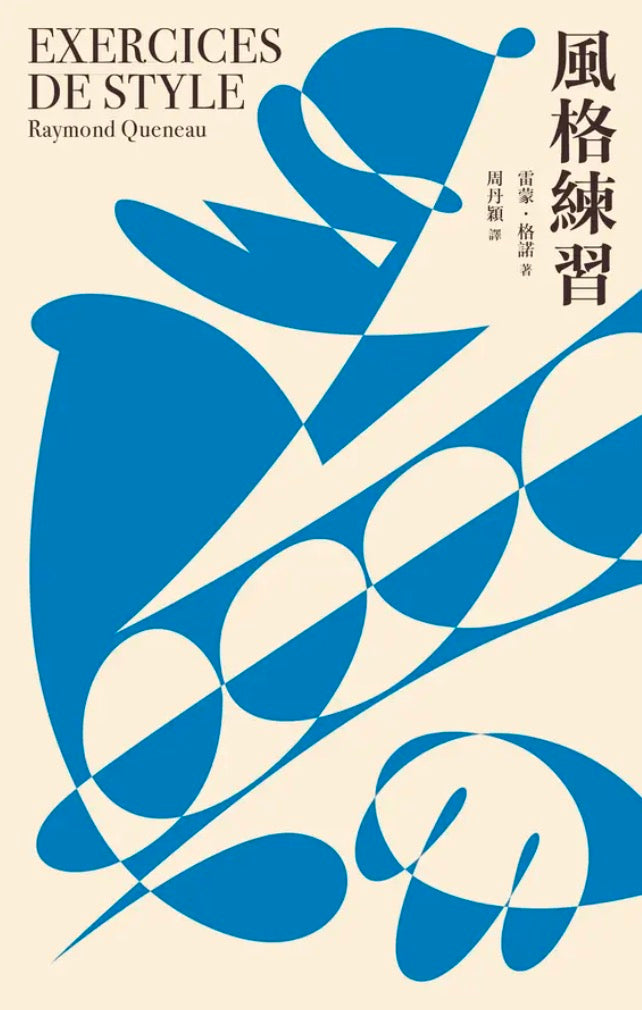
Style imitation, meme generation, endless creative appropriation, replication, adaptation, interpolation, and rewriting in the digital age—could these have been achieved with only ink-printed paper before the advent of the internet? Let Raymond Queneau's Exercises in Style, which still astonishes over seventy years after its publication, demonstrate!
Exercises in Style narrates the same trivial incident in ninety-nine different ways. Like variations on a theme, the ninety-nine exercises push the boundaries of creative imagination. Reading them consecutively may spark unprecedented inspiration in readers, unleashing their nascent creative urges. Thus, this is not merely "an author's work," but also "a reader's work": as enthusiasts read and understand, and then join in the exercises, this work has not only spawned cross-genre derivatives such as illustrations, comics, music, advertisements, and stage plays, but has also become a textbook model for French rhetoric and creative writing. It seems to have foreseen the vibrant writing styles of the internet era, constantly being given new life over the years, making it an enduring cross-century literary classic.
Queneau parodies existing rhetorical devices, literary styles, genres, jargon, and terminology. Beyond Oulipian "constraint" experiments, he employs colloquialisms and double entendres to create intricate wordplay challenges, giving Exercises in Style its reputation as "untranslatable." Consequently, conveying the original text's pleasure and playfulness across linguistic and cultural differences poses unimaginable challenges and trials for translators. Writer Chou Dan-ying navigated the boundaries of translation, adaptation, and re-creation, racking her brains to finally bring the first Chinese translation to the Sinophone world. The editing of this book also adheres to the spirit of cross-disciplinary practice, inviting designer Hsiao Tzu to freely express himself, visually echoing the spirit of the exercises. The hope is that when Chinese readers close the book, they too will exclaim:
Writing is quite enjoyable after all!