
Rat family
Rat family
Couldn't load pickup availability
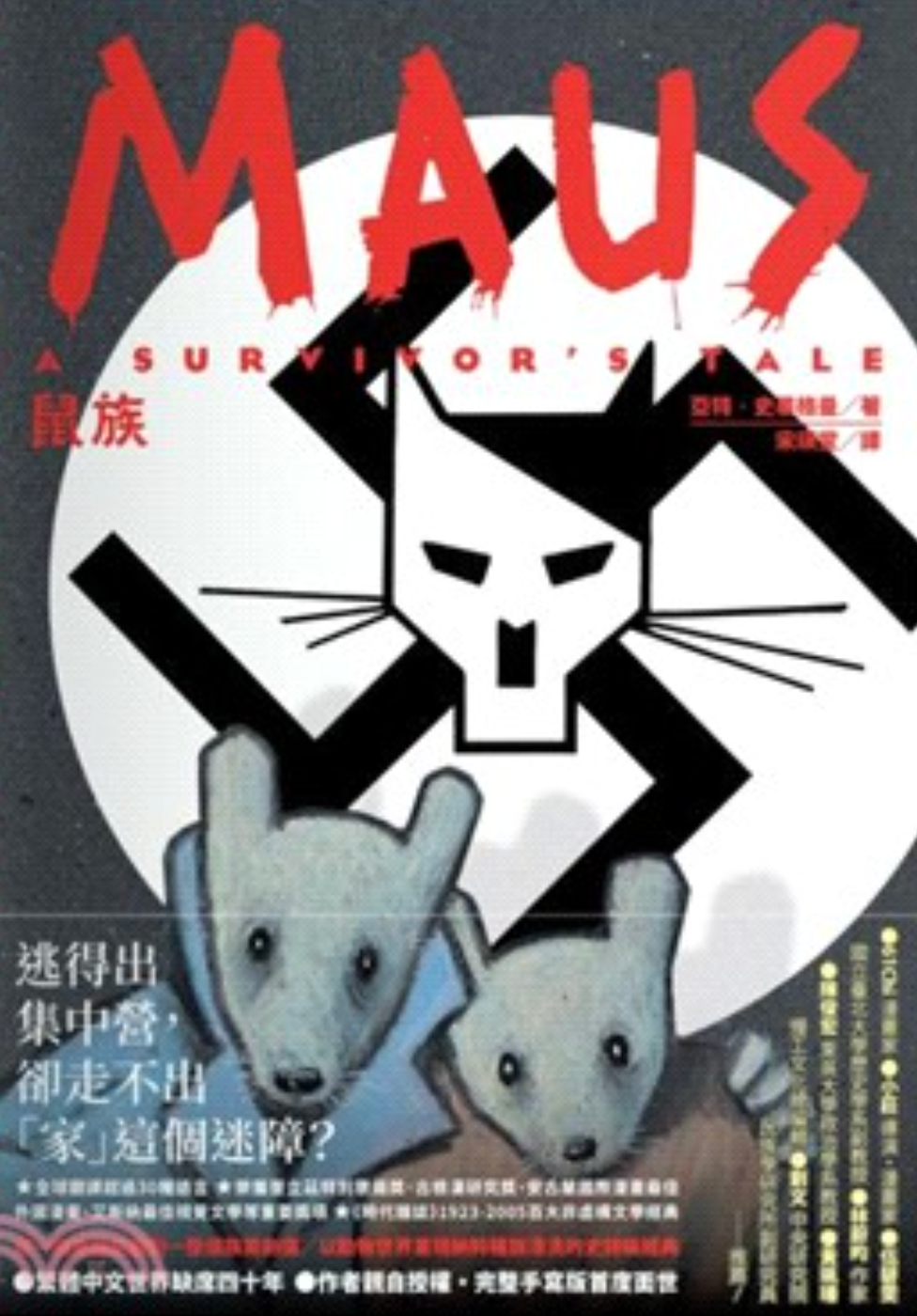
Escaped the concentration camp, but couldn't escape the maze of "home"?
From a family tragedy to the trauma of an entire ethnic group
An epic classic that recreates the Nazi ethnic cleansing in an animal world
──Special Introduction
61Chi│Comic Artist
Hsiao Chuang│Director and Comic Artist
Wu Bi-Wen│Associate Professor, Department of History, National Taipei University
Lin Wei-Yun│Writer
Chen Chun-Hung│Professor, Department of Political Science, Soochow University
Huang Pei-Shan│Editor-in-Chief, Slowork Publishing
Liu Wen│Associate Research Fellow, Institute of Ethnology, Academia Sinica
──Recommendations
★Translated into over 30 languages worldwide
★Winner of numerous prestigious awards including the Pulitzer Prize Special Citation, Guggenheim Fellowship, Angoulême International Comics Festival Best Foreign Comic, and Eisner Award for Best Graphic Album
★Named one of Time Magazine's 100 Best Nonfiction Books of All Time (1923-2005)
★Regarded as one of the most important and renowned non-fiction comics, alongside "Persepolis"
Absent from the Traditional Chinese World for Forty Years
Authorized by the Author Himself‧Complete Handwritten Edition Debuts
When discussing non-fiction graphic novels or documentary comics, Art Spiegelman's "Maus," serialized from 1978 to 1991, is always mentioned as a representative work. This book is a classic of non-fiction comics and a groundbreaking work on the subject of the Holocaust. It was also exhibited at the Museum of Modern Art in New York from 1991-1992.
This book meticulously portrays the traumatic experience of a survivor, not only recreating how the Nazis gradually encroached upon daily life but also showing readers how that history continues to impact the present, from his mother's postwar suicide, his father's remarriage, and the discord between father and son—family entanglements that could not be escaped despite surviving the Holocaust.
The term "Maus" symbolizes Hitler and wartime Germany's contempt and discrimination against Jews. The real-world ethnic cleansing is transformed into a cat-and-mouse analogy in the author's work, and the persecution of Jews by the Nazis is recreated through his repeated long conversations with his father.
What kind of adaptability allowed the author's father to survive, and at the same time, allow his wife to also escape death? What complex emotions led to his wife's suicide, and made his son and second wife both love and hate him, yet still unable to abandon him? In the tide of history, we see the admirable vitality of a survivor, and from the son's perspective, we are both impatient with and sympathetic to this neurotic and miserly father.
See how the author uses comics to recreate the workings of totalitarian politics and honestly depict how his father, in his eyes, was both a victim and a perpetrator,立体再現時代悲劇過後的歷史餘緒.