
VOP Issue 33: Phantom Medium
VOP Issue 33: Phantom Medium
Couldn't load pickup availability
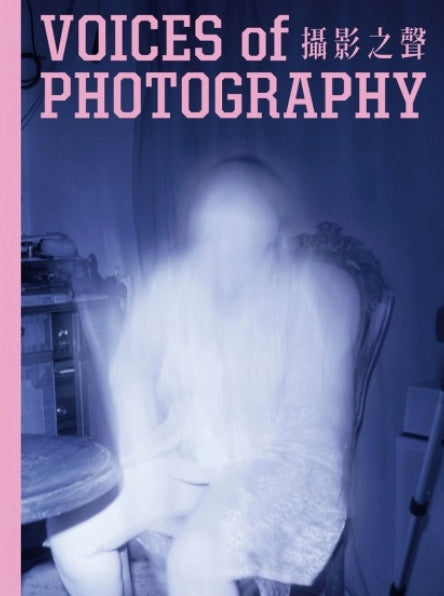
The earliest photographs, taken at the dawn of photography—Hippolyte Bayard's 1840s work, "Self-Portrait as a Drowned Man" (Autoportrait en noyé)—already foreshadowed the eternal intersection of photography and the theme of death. It was as if photography declared itself a "nether interface" that connects the living and the dead, a symbiotic duality echoing between the realms of light and shadow.
In this issue, Lee Li-Chun expounds on how photography became the spiritual raiment of physical death, yet simultaneously conveyed eternal life through the posthumous portraits popular in the nineteenth century. Chen Ya-Wen excavates the ancient yet immortal spirit of the skeleton in visual themes over the past six centuries, tracing its journey through magic lanterns, phantasmagoria, and its transformation into the play of light and shadow in the cinematic era. Chen Meng-Lan delves into the meaning of "spirit" in photographic "images," exploring the burgeoning "spiritual photography" among spiritualist groups in Shanghai during the early Republican period in the 1910s, and the ontological reflections on photography that emerged from the oscillation between scientific empiricism and spiritual desire in attempts to capture "spirits." In East Asia, where belief in the "afterlife" and corresponding traditional customs are widespread, Kim Ji-Hye conducts a cross-regional comparative study of the cultural history of images involving photography in ghost marriages,遺照 (yishao - posthumous portraits), and love suicides, simultaneously revealing the patriarchal social structures behind the images of deceased spirits. Chen Wan-Yun contrasts Continental avant-garde art influenced by early 20th-century "automatic writing" spiritualism, parapsychological examinations, and artist Hsu Chia-Wei's video work, which combines revelations from the spirit medium of the Matsu deity "Iron Armored Marshal" palanquin and digital computational records. She investigates the various transformations of mediumistic technologies in the quest for spirituality and deities. Chang Shih-Lun reviews Taiwan's most famous case of spiritual manifestation since the 1990s—Song Chi-Li's doppelgänger photography—dissecting the wondrous universe overflowing with "light" and "images," and the cultural implications of how paranormal imagery once became a popular phenomenon in post-martial law Taiwan.
Additionally, we specially feature artist Shannon Taggart's nearly two-decade-long personal investigation into Spiritualism. Her series "Séance" documents the long-standing spiritualist communities in Europe and America and contemporary seance rituals, embodying the body and photography as spiritual "mediums." The "Artist's Showcase" section spotlights artist Chang Hsu-Chan, introducing his recently acclaimed stop-motion animation, "Tropical Re-Eye," and exploring how he transforms paper craft artistry, folk performance troupes, and traditional folktales to construct a vibrant puppet allegory theatre. Amidst layers of illusory screens, this issue features a translation by Hsieh Pei-Chun and the first publication of art historian Noam M. Elcott's latest research on the "screen," a key element of visual media. He meticulously examines how European avant-garde artists in the early 20th century explored the concepts and experiments from canvas to screen—from etymology to practice, material to symbol. His examination of how a medium becomes a medium provides important perspectives for exploring media history.
This issue also focuses on Japan's photography publishing culture, featuring interviews with photography researchers Toda Masako and Ivan Vartanian. They share their recently completed large-scale compilation on the history of Japanese photography magazines, tracing the footprints left by Japanese photography publications in the Japanese photography and image publishing history during their most flourishing century since the 1880s. The "Photo Book Production Site" series visits independent publisher SUPER LABO's exclusive exhibition space in Tokyo, offering a close look at the operating methods of this distinctive one-person publishing brand.