
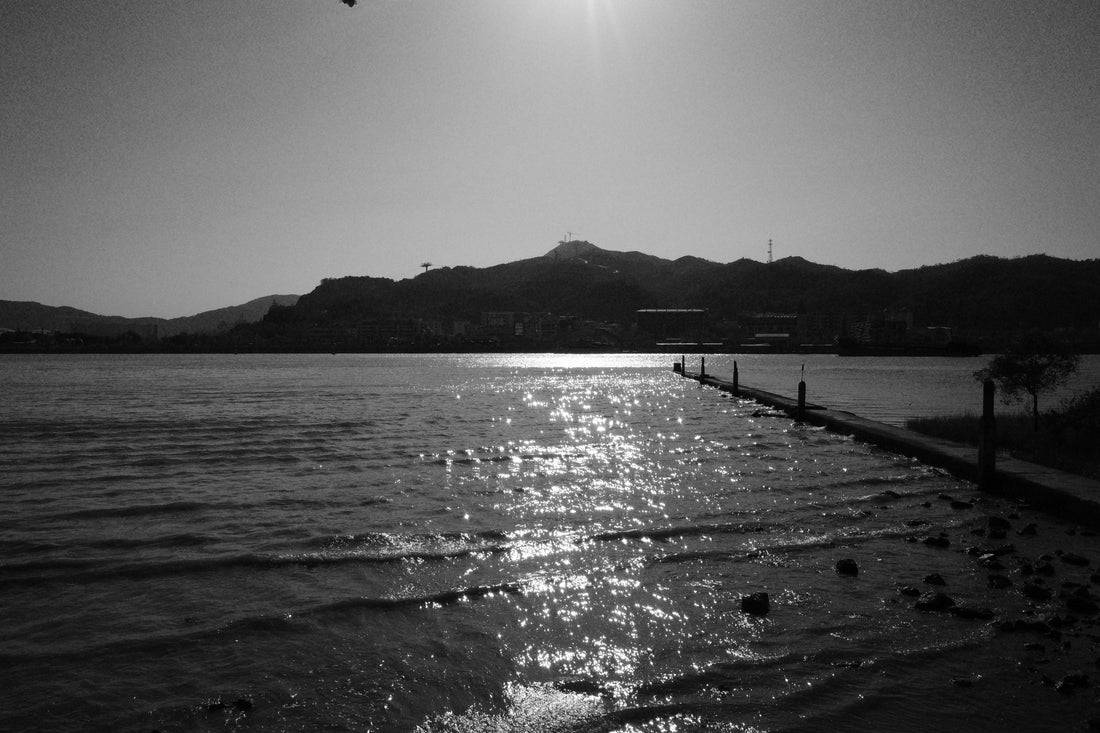
Walking Through Light and Shadow: A Photography World Stripped of Color
In the digitally saturated era, black and white photography, stripped of color, still maintains its unique charm and irreplaceable position in the art world. When the image is no longer enveloped in vibrant colors, it returns to its most essential state — leaving behind a dialogue between light and shadow.
When I was young, I completely failed to appreciate black and white photography, finding it monotonous and uninteresting. However, as I gained a deeper understanding of photography, I discovered that "black and white photography" is an art of visual subtraction. When the image is no longer distracted by colors, the viewer's gaze naturally focuses on its internal structure, revealing more texture and layers through varying shades of gray. Moreover, capturing a good black and white photo is more challenging, with the contrast between light and shadow accentuating dramatic tension. This pure visual language allows the image to return to its fundamental state.
Early last year, M+ in Hong Kong hosted a special exhibition titled "The Hong Kong Jockey Club Series: Noir & Blanc—A Story of Photography." It showcased over 250 precious photographs from the collection of the Bibliothèque nationale de France, alongside more than thirty works from the M+ Collection, demonstrating the enduring artistic medium of black and white photography.

The exhibition featured photographic works from 1915 to 2019, including pieces by over 170 internationally renowned photographers such as Man Ray, Diane Arbus, Mario Giacomelli, Robert Frank, William Klein, Daido Moriyama, Valérie Belin, and Henri Cartier-Bresson.

Works by Daido Moriyama.

Works by Henri Cartier-Bresson.

There are also several M+ collection works by renowned Asian photographers and artists, including Chang Chao-tang, Fan Ho, Lang Jingshan, Liu Heung Shing, Nalini Malani, Yasuhiro Ishimoto, and Ho Fan.
The exhibition was themed around "Contrasts," "Light and Shadow," and "Colourscapes," offering different perspectives to help audiences understand over a century of black and white image production, highlighting the nuances of grayscale and how monochrome photography can produce endless variations.
In this monochromatic world, time seems to be frozen into eternity. Even after many years, it can still convey the atmosphere and temperature of the photograph. This type of image possesses a magical power that transcends time and space, transforming moments into eternity and elevating memories into art. As seen in Marc Riboud's work below, even from scenes separated by window frames, individual independent interpretations can be made.

Marc Riboud went to China in 1957, being one of the first European photographers to enter China at the time. The image was taken in Beijing in 1965, during the Cultural Revolution, when people handed over their family jewelry to antique shops on the street to the state.
This form of expression also reflects the inner world of the creator. When color is stripped away, the emotions and atmosphere in the image become even more intense. Between deep dark tones and pure brightness, there are infinite layers of variation, making it the best medium for expressing feelings.

Roland Barthes, Camera Lucida: Reflections on Photography, interior page.
In Camera Lucida: Reflections on Photography, French thinker Roland Barthes wrote: "The photograph is literally an emanation of the referent. From a real body, which was there, proceed radiations which ultimately touch me, who am here; the duration of the transmission is insignificant; the photograph of the missing being, as Sontag says, will touch me like the delayed rays of a star. A sort of umbilical cord links the body of the photographed thing to my gaze: light, though impalpable, is here a carnal medium, a skin I share with anyone who has been photographed."

Jing Jing also held a mini exhibition of black and white photography using thermal paper, attempting to record the most pure and personal moments in the simplest way.
In this era of constant "shutter clicks," the simplest form of expression precisely reminds us to slow down and attentively feel the subtle changes of light and shadow. It is not just a photographic technique but also a way of seeing the world. When we learn to observe the world in this manner, perhaps we can discover more pure and eternal beauty amidst the complex realities.
-