The meaning of graffiti


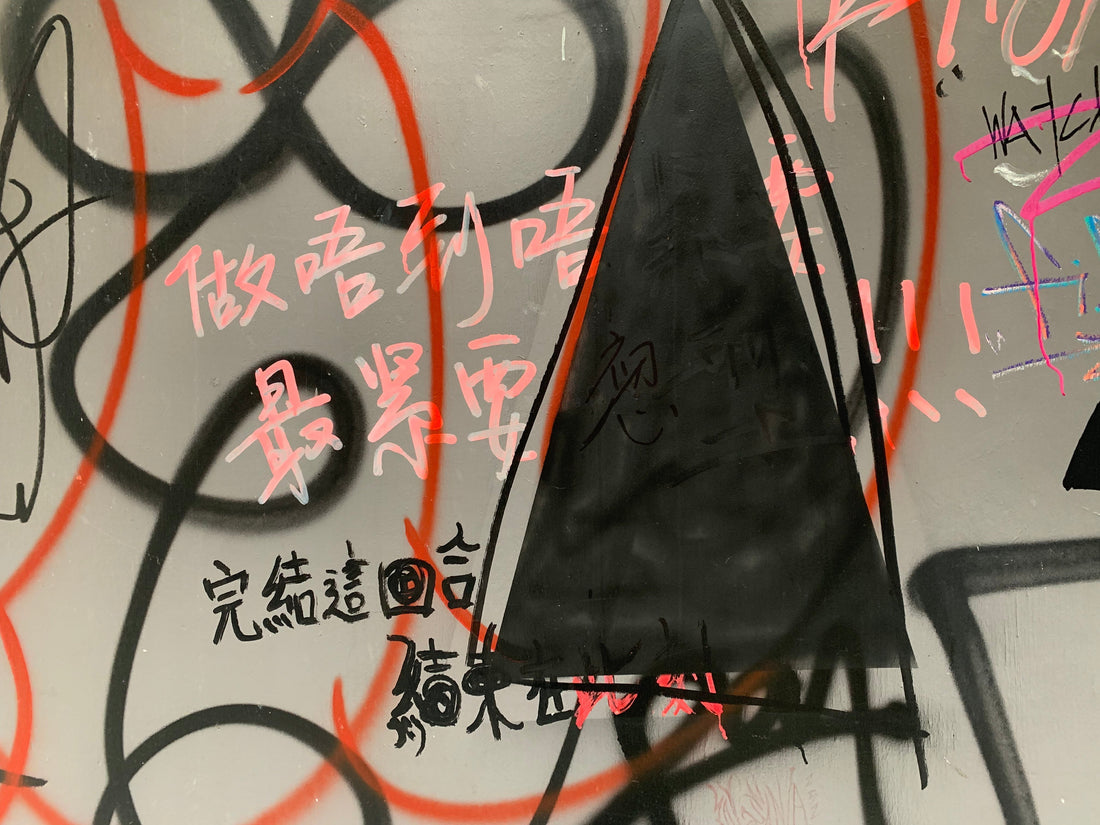
Graffiti on a building in Hong Kong.
When I arrived, I saw white paint covering the graffiti, with the faint outlines of the patterns underneath. At first, I thought it was a sloppy whitewashing job, but then I realized that this incomplete coverage symbolized a deeper meaning — the city's voice refusing to be suppressed. I was reminded of Kenya Hara's " White," where he references Buddhist and Japanese aesthetics, describing white as "emptiness." White, as "colorless," represents non-existence, but it is not empty; it is a transitional state, awaiting new meaning. In the graffiti on this building, the white paint becomes a canvas for new ideas. Attempts to erase the writing on the walls only provoke greater resistance, and beneath the white paint, the city's voice is louder than ever. Hong Kong's graffiti reflects an unyielding spirit. Even when covered, these works persist in memory, their passion so intense that it cannot be erased. No amount of paint can suppress the message it conveys; graffiti has become a powerful tool for activism.
Now, let's pause and consider: what do you think Macau's graffiti is?
The first thing that comes to mind are the brightly colored "graffiti" walls commissioned by businesses, designed to attract tourists to take photos for social media. These are not true graffiti, but murals, meant to please rather than to speak, lacking the raw rebellious energy of Hong Kong's street art.
In "Ways of Seeing," John Berger describes advertising as a product of capitalism, promoting an idealized lifestyle often associated with modern consumer culture. These images are not just meant to sell products but to create desire, enchanting fantasies, and a sense of inadequacy in the viewer, implying that buying products or consuming will bring them closer to their ideal self and life. Similarly, Macau's mural photo spots are a product of modern people's obsession with perfect images on social media. Users carefully select photos, seeking social approval through beauty, success, and charm. This reinforces consumerist culture, prioritizing external validation over genuine satisfaction, making it one of capitalism's most favored cultures. Ultimately, this attracts more people to visit the murals, making them an asset for tourism and generating income, thereby fulfilling capitalist goals.
In addition, Nato Thompson, in "Seeing Power: Art and Activism in the 21st Century," points out that with the popularity of graffiti and street art, they are commodified, transforming into cultural products that can be bought, sold, displayed, and profited from. This often undermines the anti-capitalist spirit of graffiti. Mainstream brands and corporations appropriate graffiti aesthetics for advertising campaigns, turning rebellious street art into a tool of consumerism. This appropriation dilutes graffiti's message, making it a superficial trend serving commercial interests.

 Graffiti in the streets and alleys of Macau.
I cannot assert that all graffiti in Macau serves capitalism. There must be some works hidden in alley corners, containing the same rebellious spirit as Hong Kong's graffiti. Faced with commercialization, graffiti must rediscover its original intent of resistance — challenging authority, questioning social norms, and expressing personal thoughts. It remains a powerful form of protest revealing inequality and a tool for activism.

Unofficial Banksy solo exhibition "Banksy: Nowhere to Be Seen" held in Shenzhen.Image source: https://p-articles.com/heteroglossia/5497.html
Recently, in Shenzhen, the first unofficial solo exhibition of anonymous British graffiti artist Banksy, "Banksy: Nowhere to Be Seen," was held. His name and art were commodified, and his anti-capitalist message was transformed into a commercial spectacle, diluting the social critique within his works. The exhibition domesticated "rebellion" into "taste," and packaged "protest" into a "photo opportunity." Ironically, one of the exhibited works read: "If graffiti changed anything — it would be illegal." This statement critiques the powerful for suppressing art that challenges the status quo and defining it as illegal.
I can't help but wonder: was this exhibition curated to genuinely inspire critical thinking, or to manipulate Banksy's graffiti for profit? What was the underlying motive? "If graffiti changed anything — it would be illegal." So, are the exhibited works legal or illegal?