
Forgotten Kingdom: Myanmar
Christmas 2019, a friend and I embarked on a journey to Myanmar. In the eyes of people from Hong Kong and Macau, Myanmar is definitely not a popular tourist destination, but this trip completely changed my impression of the country.
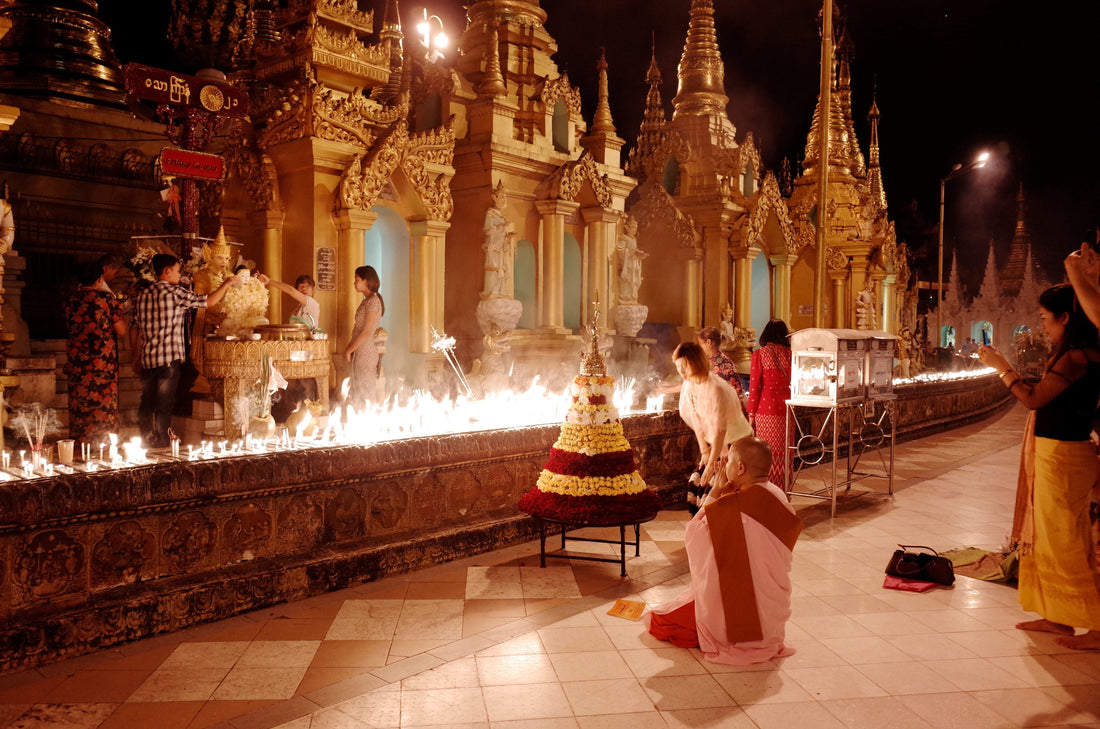
As a predominantly Buddhist nation, Myanmar boasts countless temples and pagodas. Whether in Yangon, Mandalay, or Bagan, magnificent Buddhist architecture and a devout religious atmosphere are ubiquitous. Walking the streets, it's common to see monks in their robes and worshippers sincerely praying before temples, deeply conveying how Buddhist culture permeates the daily lives of the Myanmar people.

The famous Shwedagon Pagoda in Yangon is bustling with activity and bright with lights.
The former capital, Yangon, retains much of its colonial-era architectural charm. However, this city is quite interesting: its architecture is British, while its trains are from Japan, and the buses are emblazoned with large Korean characters. This seems to suggest that Myanmar is a country incapable of production, with all its transportation tools imported from abroad. Yet, Myanmar's unique traditional culture is omnipresent; almost everyone on the streets wears their traditional garment, the "longyi" (a cylindrical skirt worn by Myanmar people, consisting of a rectangular piece of cloth tied around the waist). Although the people may not be wealthy and local prices are very cheap—ten Hong Kong dollars can buy a meal, albeit not a lavish one—they always wear a simple smile, as if narrating their stories to visitors.

The buses in Myanmar give one the illusion of being on a street in Korea.
In Myanmar, those engaged in writing or creative arts may also lack opportunities to be seen. However, a book published in Taiwan by Yuan-Liou Publishing, titled "The Storybook of a Myanmar Poet," states that "writing poetry is dangerous. Sometimes, you don't even need to write poetry; simply owning a 'fax machine' is enough to land you in prison." For them, writing poetry is a painful, necessary, and life-sustaining nourishment. It is the weakest form of resistance, yet also the strongest affirmation of being human.
In "The Distance of Solitude," a book published by Breakthrough in Hong Kong, independent journalist Lee Yuet-mong visited Myanmar in 2015 to witness a historic moment for the country—its first democratic election in twenty-five years. This election saw an overwhelming victory for the National League for Democracy, led by Aung San Suu Kyi, symbolizing a crucial step towards democracy for Myanmar.
During this period, Myanmar experienced a brief moment of peace and hope. However, this good fortune was short-lived. In 2021, the Myanmar military launched a coup, overthrowing the National League for Democracy government that had won the 2020 parliamentary election. The coup triggered a prolonged civil war and social unrest, leading to countless casualties over the years. Yet, Myanmar's international attention remains far lower than that of other war-torn countries, with few related news reports. The civil war has plunged Myanmar into deep suffering, and a recent major earthquake has compounded its woes. According to BBC Chinese, the earthquake's epicenter was in the capital, Mandalay, with a magnitude of 7.7 on the Richter scale. As of the morning of March 31, according to the Myanmar military, the earthquake caused at least 1,700 deaths and approximately 3,400 injuries. Many historically valuable buildings were severely damaged, which is regrettable. Meanwhile, international media reported far more on the earthquake in Bangkok than in Myanmar, as if the country has once again been forgotten by the world.

The Hsinbyume Pagoda in Mandalay was also destroyed by the earthquake.
The land of Myanmar has endured so much suffering, from the colonial era to military rule, from the brief blossoming of democratic hope to the long darkness of civil war. Its history is full of upheaval and change. There are also many Myanmar laborers in Macau; I wish their families peace, and I hope the world will pay more attention to Myanmar, and that peace will soon come to this battered land.
-