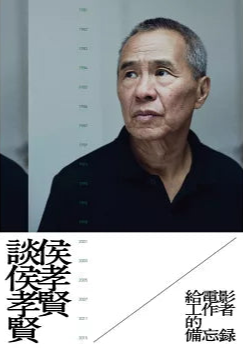


Hou Hsiao-Hsien on Hou Hsiao-Hsien
Hou Hsiao-Hsien on Hou Hsiao-Hsien
Couldn't load pickup availability
A complete retrospective of a cinematic journey
Aesthetics, cinematic language, and practical operations imparted wholeheartedly
"Move yourself before you move others."
From November 5th to 7th, 2007, director Hou Hsiao-Hsien was invited by Mr. Cheuk Pak-Tong to give lectures at Hong Kong Baptist University, which were later compiled and transcribed into the content of this book. During those three intensive days, seven discussions were held. Except for the last two dialogue and Q&A sessions, all were delivered by director Hou Hsiao-Hsien, who shared his rich creative journey in detail with the attendees.
In addition to recounting his own cinematic journey, the director also expressed his views and concepts on film aesthetics. At the same time, he also shared his practical knowledge without reservation: how to conceive scripts, cast actors, communicate on set, direct scenes, record sound, light, and so on. He also shared his working methods with collaborators; how to bring out the potential of actors such as Shu Qi and Lim Giong; and finally, he macroscopically envisioned the future of Taiwanese cinema. During the lectures, he not only conveyed his passion and sense of mission for cinema but also showed a very approachable side, vividly recalling precious moments from his career.
The most important thing in cinema is people.
Unlike many directors, Hou Hsiao-Hsien is interested not in events, but in "people." Director Hou's love for people has always been an unchanging fact; he can even tailor a film for someone. Being keen on observing details, he can always discern people's characteristics and charm from the myriad of daily information, and he is deeply fascinated by them.
However, before observing others, one must first observe oneself. "Because only when you understand yourself will you discover the differences in others." Many scenes in "A Summer at Grandpa's" come from director Hou Hsiao-Hsien's meticulously organized notes. Only by sorting through yourself can you truly understand the people before you, and only by opening your heart to face them, without evasion or hiding, can you understand and solve problems.
Human nature is a constant focus in Hou Hsiao-Hsien's films, regardless of whether the era being filmed is ancient, pre-modern, or modern. Human nature does not change, and this further attracts the director to interpret it. In Hou Hsiao-Hsien's films, there are often characters with malicious intentions challenging the audience's nerves, but what the director most wants to capture is the tiny spark of "goodness" that exists even during acts of violence and aggression. The capture of human nature and a strong interest in people have become the enduring foundation of Hou Hsiao-Hsien's cinema.