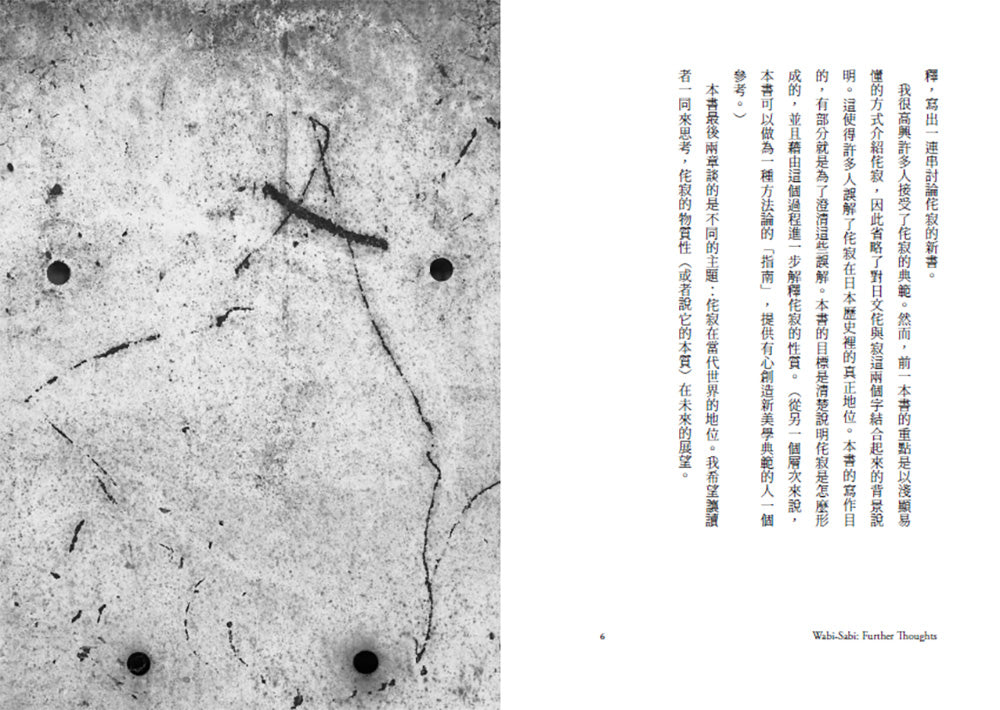


A Deeper Dive into Wabi-Sabi
A Deeper Dive into Wabi-Sabi
Couldn't load pickup availability
Wabi-Sabi: Simplicity, Zen, Imperfection, and Impermanence
This classic Japanese aesthetic philosophy, passed down for five hundred years,
How did the concept take shape, why is it so elusive, and why does it clash with our rapidly changing digital age?
The profound concept of "wabi-sabi" can be said to connect many deep spiritual and cultural expressions within Japanese culture. However, precisely because of this, the concept is exceptionally mysterious and difficult to articulate.
Leonard Koren's "Wabi-Sabi for Artists, Designers, Poets & Philosophers" first introduced wabi-sabi to the Western world. His clear descriptions and definitions clarified the meaning of wabi-sabi, leading to its popularization and inspiring a surprisingly broad wabi-sabi trend in design, architecture, art, and even business. For many, wabi-sabi is no longer an unfamiliar term after thirty years. Yet, when we see many deliberately distressed, faded, mottled, and rusted bowls, plates, and vessels, or even interiors, how can we be sure that our understanding isn't a superficial misinterpretation of wabi-sabi's definition, but truly grasps its deep and subversive core?
Wabi-sabi is:
The aesthetic Other
The metamorphosis of ordinary things
Frugality
Imperfection
Infinite possibilities born from "nothingness"
If understood superficially, such definitions can easily become flat and rigid ideas, leading to many things bearing the name of wabi-sabi but being unrelated, or even contrary, to its core spirit. Therefore, Koren delves into the origins of wabi-sabi, examining the background and evolution of the concept from its beginnings in poetry, tea ceremony, and Zen Buddhism, then tracing its development and decline. When we understand the formation process of wabi-sabi, we can appreciate that these characteristics are not arbitrary aesthetic judgments, nor prescriptive guidelines to be imitated, but rather a more comprehensive acceptance, appreciation, and rediscovery of value concerning the environment, objects, state of mind, and feelings.
The most unexpected reward of this retrospective journey is the understanding that wabi-sabi is not an inherent quality of certain things, nor a characteristic unilaterally defined by their creators. Rather, it is an interpretation and discovered value that the observer, having understood the essence of wabi-sabi, attributes to things with a wabi-sabi mindset.
That is to say, if one is aware of the nature of external objects, the state of inner emotions, and one's spiritual attitude, one can perceive wabi-sabi in a gradually decaying leaf before one's eyes.
Once we can perceive wabi-sabi, while looking back, we can also focus on the present and avert crises. In today's information-saturated digital world, wabi-sabi is a counter-philosophy that allows us to step back and re-evaluate whether the virtual world of 0s and 1s, simplification, and pixel simulation has deprived us of our life experiences and daily details, dulling our sensibilities and trapping us unknowingly in sensory poverty. Through wabi-sabi's dynamic and subversive thinking, which emphasizes engaging with reality through one's own perspective, appreciating details, actively interpreting, and breaking frameworks, we may finally avoid falling into the predicament of apathy.