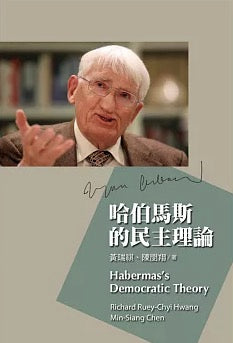

Habermas's theory of democracy
Habermas's theory of democracy
Couldn't load pickup availability
Reflecting from the perspective of legal theory, it demonstrates that the core element of the democratic process lies in the procedural nature of deliberative politics.
—Habermas
Habermas's theory of democracy encompasses the public sphere, civil society, and deliberative democracy, all interwoven with his communication theory. This book consolidates several special research projects funded by the Ministry of Science and Technology, as well as a monograph writing project that integrated these specialized studies—"Habermas's Theory of Democracy"—and we now present these efforts in condensed form in this book.
Forty years have swiftly passed since Habermas vowed to complete the project of modernity. Has the path to democracy been accomplished? Habermas once said, reflecting on modernity, that modernity's self-understanding is characterized not only by theoretical "self-consciousness," a self-critical attitude towards all traditions, but also by moral and ethical ideas of "self-determination" and "self-realization." Modernity is still advancing, and the tide of globalization continues. The challenges to democracy are not merely the gap between norms and reality; they also necessitate directly confronting concrete political practice disputes, especially today, amidst highly globalized interactions, with rapid internet information dissemination, highly developed electronic media, economic interdependence, and frequent transportation. How to continue leveraging the power of reason from the legacy of modernity might be the inspiration that late Habermas's macroscopic political thoughts concerning democracy, justice, and globalization can still offer us.