
The young man has arrived.
The young man has arrived.
Couldn't load pickup availability
|
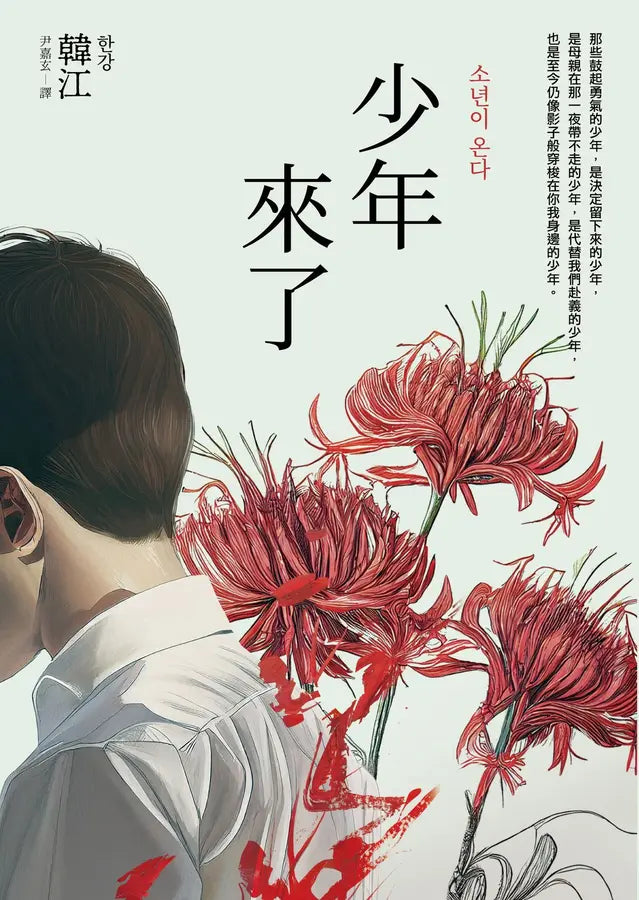
Following Han Kang's International Booker Prize-winning novel The Vegetarian, a beautiful and brutal masterpiece that resonates with readers worldwide. ◆ The youths who bravely faced the military, were the youths who chose to stay during the Gwangju Uprising, and the youths whom mothers couldn't take away on the night of 5.18; they were the youths who sacrificed themselves for us, and the youths who still move among us like shadows.
"In a world where dignity and violence coexist, another Gwangju could emerge in any corner, in any generation." — Han Kang
■"BTS's Kim Nam-joon highly recommends it!" ◎One of Amazon.com's Top 100 Books of 2017 ◎Winner of the Malaparte Prize in Italy in 2017 ◎The Guardian's Book of the Year and The Irish Times' Best Novel of 2016 ◎Winner of the Manhae Literary Award in Korea in 2014 ◎Touched readers worldwide, sold 400,000 copies in Korea! Ho Sa-na (Assistant Professor, Department of Sociology, Soochow University), Fang Hui-chen (Writer, Journalist), Chen Yu-chin (Novelist), Chen Hsueh (Novelist), Chen Ching-te (Korean Social and Cultural Expert, Author of Rewriting Korea), Liu Tzu-chieh (Writer) ◎Unanimously recommended (in order of stroke count of surnames) ◆ uIt's absurd, isn't it? How can fists ever beat guns? In May 1980, citizens and students of Gwangju, Korea, organized demonstrations to protest the Chun Doo-hwan regime. 15-year-old Dong-ho and his friend Jeong-dae also participated in the demonstrations. When the government dispatched troops to Gwangju for a cold-blooded suppression, and soldiers began shooting citizens, Dong-ho fled in fear and hid, witnessing Jeong-dae being shot dead in the street. Filled with guilt, Dong-ho went to the Sangmu Hall in the provincial office to look for Jeong-dae's body. There, he met Eun-suk, a high school girl responsible for preparing bodies for burial, and Seon-ju, a young seamstress. At their request, he stayed to help, and also met Jin-su, a male university student who was coordinating manpower and supplies in the hall. While assisting with the registration of unidentified bodies, Dong-ho often blamed himself for his cowardice. A few days later, on the night the military was about to storm the provincial office, Dong-ho resolved to hold out until the very end… uWhy did he die, and I live? Eun-suk, who could no longer eat meat after dealing with bodies; Jin-su, a university student who endured inhumane treatment in detention; Seon-ju, who closed herself off, burdened by the stigma of imprisonment; and Dong-ho's mother, who couldn't persuade her son to come home in time—their remaining lives were filled with guilt, reminiscing about the young boy who bravely faced the military…
|