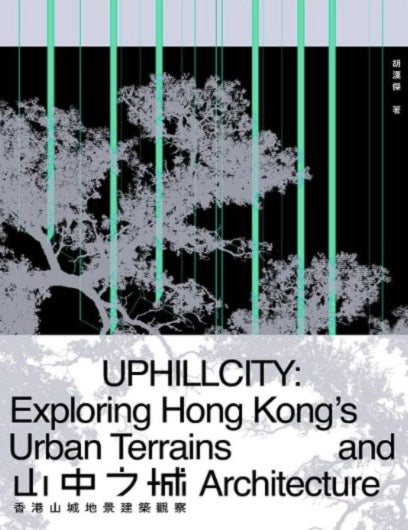

Mountain City: Observations of Hong Kong's Mountain-Urban Landscape Architecture
Mountain City: Observations of Hong Kong's Mountain-Urban Landscape Architecture
Couldn't load pickup availability
Japanese architect and scholar Muramatsu Shin described Hong Kong as a "multi-layered city," referring not only to its towering buildings and complex road network, but also to its cultural diversity and its urban development model that effectively utilizes hillsides and contour lines.
Hong Kong has many hills and little flat land. Over the years, land has been reclaimed and built upon through continuous hill leveling and land reclamation, creating its unique urban landscape: from progressively layered hillside communities to sprawling public housing estates nestled in the mountains. Unlike the ancient concept of "hermitage in deep mountains," Hongkongers live alongside mountains. Through the meticulous urban planning mindset of developers and the spatial layouts that cleverly utilize changes in terrain, people in these mountain cities enjoy well-rounded and self-sufficient community facilities.
This book selects five representative areas in Hong Kong for discussion. These include the Central and Western District, with its long history of development; the Southern District, where the iconic Wah Fu Estate is soon to be redeveloped; Wong Tai Sin District and Kwun Tong District, which represent the development of post-war public housing estates in the mountains; and Kwai Chung, which is an extension of the Tsuen Wan New Town. The selected landscapes and buildings within these five areas are primarily accessible points (buildings), lines (streets, pathways), and planes (communities, housing estates) that the public can easily visit.