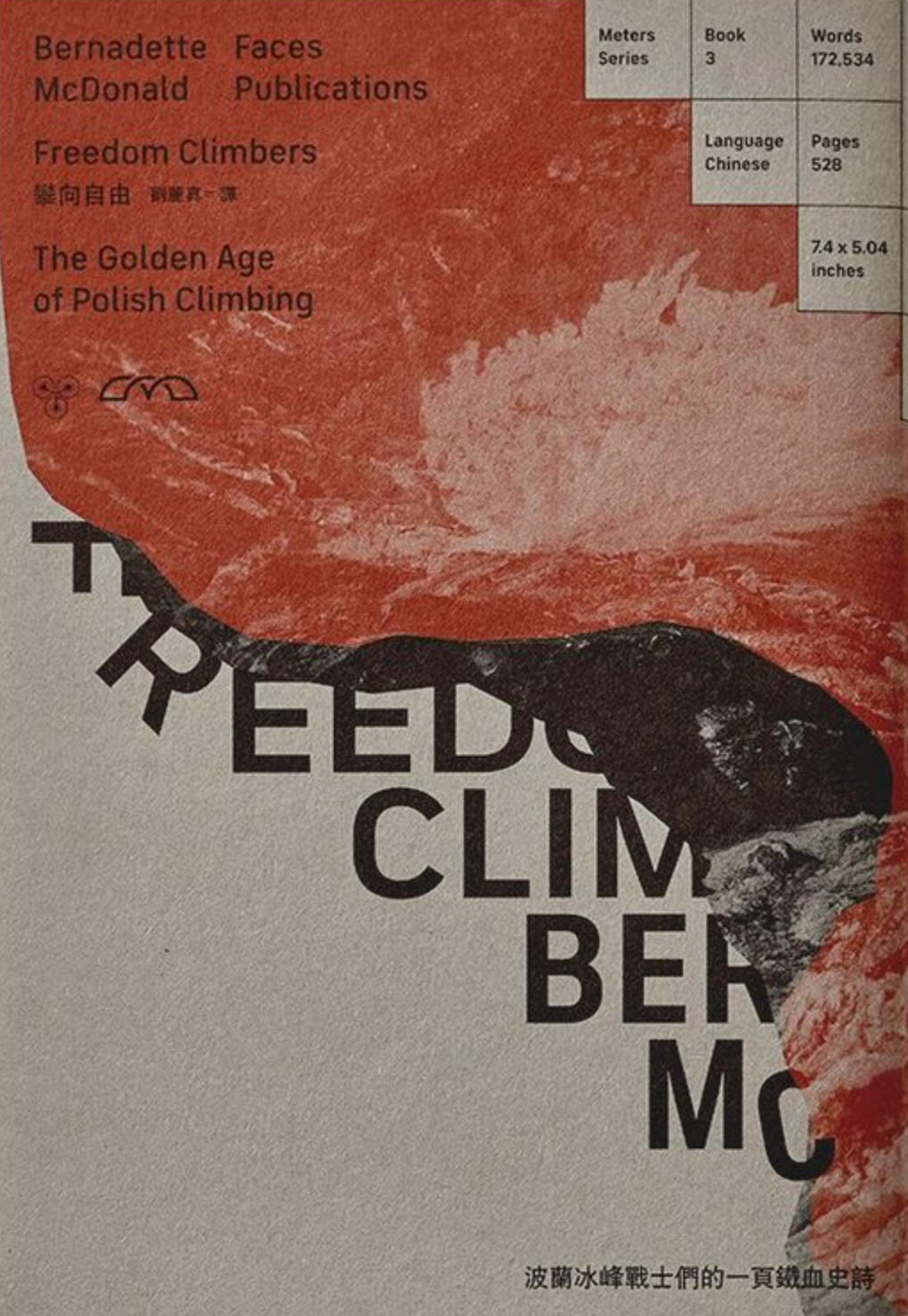


Climbing to Freedom: A Blood-and-Iron Epic of Polish Ice Warriors
Climbing to Freedom: A Blood-and-Iron Epic of Polish Ice Warriors
Couldn't load pickup availability
|Planned, selected, and introduced by Chan Wai-hung — meters, a new mountain literature series from Faces Publications in 2020|
"The brutality of war forged their resilience and perseverance.
The stories behind all elite climbers are not far off: history strengthened their bodies and minds.
They weren't just mountaineers—they were 'Polish' mountaineers."
Winner of global mountain and nature literature awards upon publication
A classic masterpiece by renowned Canadian mountain literature author Bernadette McDonald, winner of the Boardman Tasker Award for Mountain Literature
Recording the adventures, lives, and spirits of a group of legendary Polish climbers who emerged from national suffering to ascend the world's highest peaks, and the glory and sorrow of Poland.
"The most important mountain writing in years, finally published!"
──Boardman Tasker Prize for Mountain Literature
"This is an epic and captivating story that spans towering peaks and navigates political bureaucracy,
unveiling the golden age of Himalayan climbing, with a poignant yet dazzling splendor."
──Chris Bonington, British mountaineering legend
After suffering the brutal ravages of WWII and the German-Soviet powers, Poland was in ruins under totalitarian rule. Yet, in this era, a group of mountaineers emerged, not only coexisting with the oppressive regime but also, despite extreme resource scarcity, showcasing unparalleled ability and ambition to build a world-class climbing team that dominated internationally. In this book, Bernadette McDonald, the acclaimed mountain literature writer and two-time winner of the Boardman Tasker Award for Mountain Literature, chronicles the life stories of these climbers. She takes us into their minds and wills, witnessing how they forged legends amidst hardship and found lost freedom in the mountains.
▍After Nazi purges and Soviet oppressive rule, a dying Poland found a path to the world and freedom through "mountaineering."
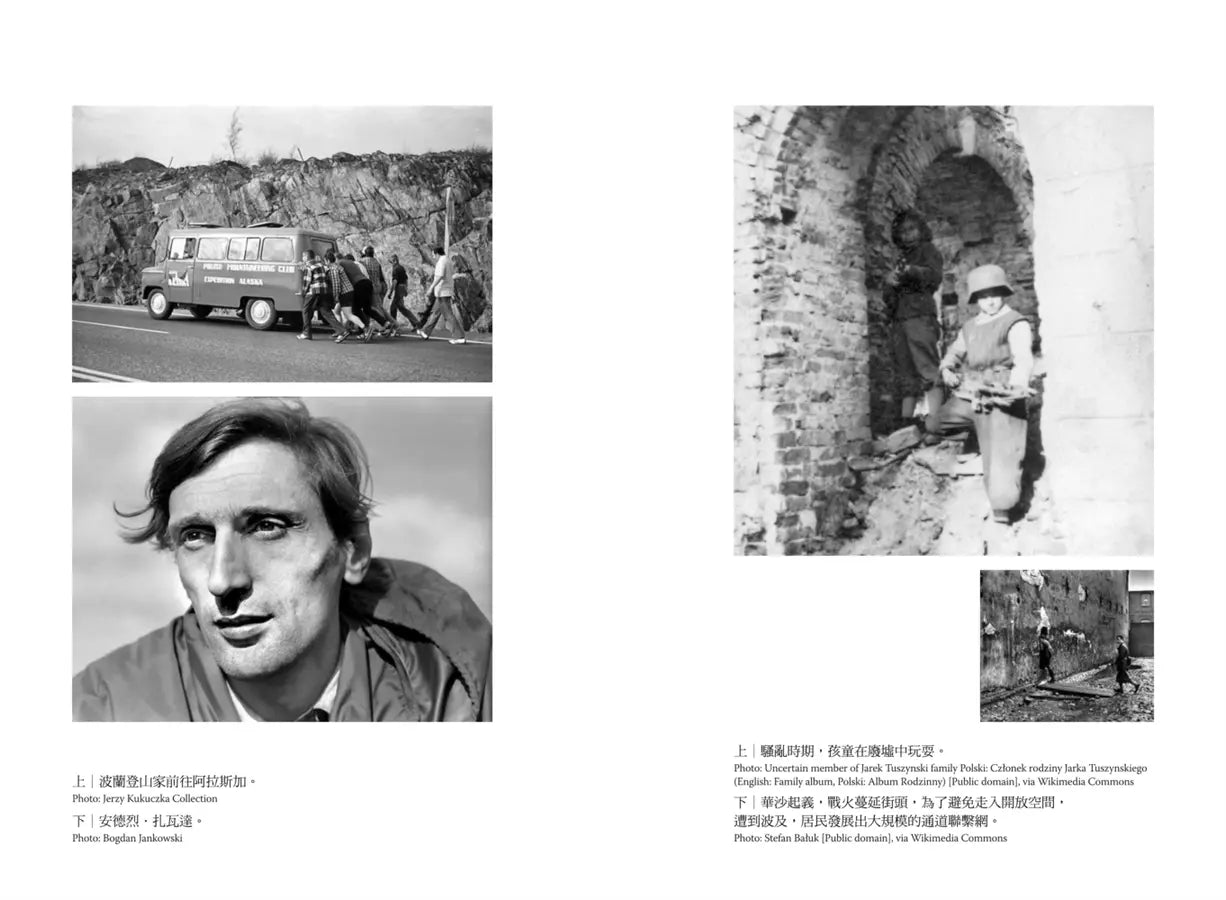
In 1939, after the Nazi-Soviet Non-Aggression Pact, Germany and the Soviet Union jointly carved up Poland. While one side sent Poles to concentration camps or executed them immediately, the other exploited Polish "criminals" as slaves. Over six million Poles, roughly 15% of the total population, died in six years. After WWII, "peace" arrived, and the Soviet Union ostensibly "liberated" Poland, but in reality, plunged it into the oppressive rule of a Soviet puppet regime.
Poland's mountaineering trend began early, with the establishment of "mountain clubs" in the 1920s and 30s, which struggled to operate even during the war. After the war, with economic ruin, widespread suffering, and dashed hopes for democratization, the communist government, starting in the mid-1950s, surprisingly allowed mountaineers to climb overseas. This was ostensibly to gain international fame for the country through their achievements. Despite the moral dilemma, many climbers, seeking freedom, chose to coexist with the regime and challenge peaks worldwide. Within a few years, many of the world's highest peaks became Polish domains.
Due to economic hardship, mountaineering equipment was almost impossible to obtain in Poland. Nevertheless, Polish climbers painstakingly assembled various pieces of equipment from raw materials—sewing clothing from fabric and zippers, commissioning shoemakers for custom boots, and blacksmiths for ice axes. Climbers also took arduous jobs domestically, such as painting chimneys, or smuggled whiskey and foreign goods abroad to raise funds, all to reach distant summits and breathe the air of freedom.
▍1970s to 1990s — The Golden Age of Polish "Ice Warriors" in the Himalayas
After the expedition boom in Afghanistan's Hindu Kush in the 1960s, the time was ripe for Poland to open up new frontiers in international mountaineering. In the 1970s and 80s, Polish climbers began to push into the Himalayas—even though other countries had already successfully summited Mount Everest, the world's highest peak, in the 1950s and 60s. Polish climbers were determined to catch up quickly and even surpass existing records: undertaking challenging winter ascents, oxygen-free ascents without supplementary oxygen, or pioneering difficult new routes that no one had climbed before. Over these two decades, they continually created astonishing and brilliant legends, earning them the global moniker "Ice Warriors."
This book will begin with three of the most representative Polish climbers, telling the story of these Ice Warriors and this golden age—
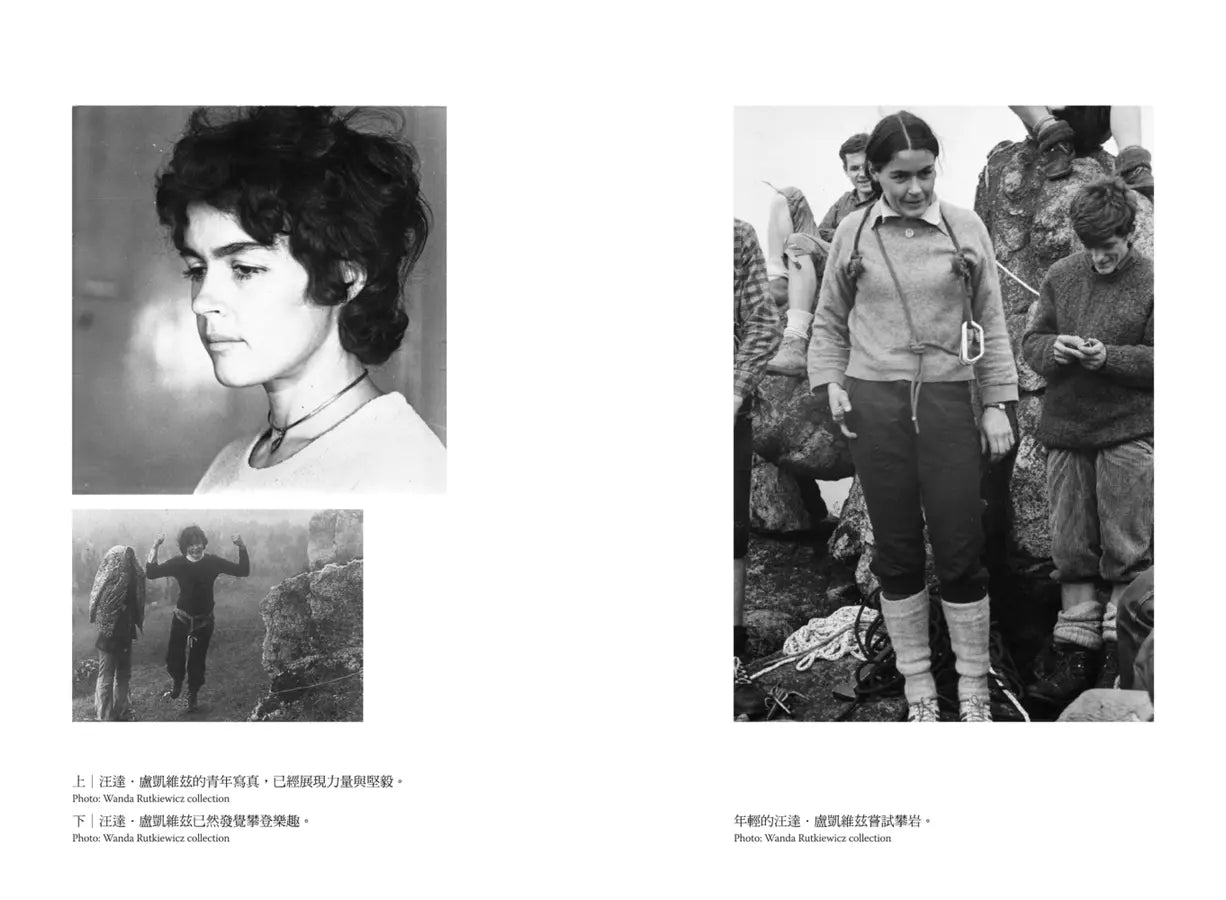
Wanda Rutkiewicz (1943-1992)
She was the first European woman to summit Mount Everest, and ascended the world stage on the same day as Pope John Paul II. Fearless, she pushed towards K2 even with a crutch, her career full of ambition, reshaping gender politics in mountaineering. She was the most dazzling star of Poland's golden age, widely considered to have achievements far ahead of her time. Yet behind the glamour, her life was fraught with loneliness and sorrow, and she held polarizing opinions within the climbing world. Even so, her fatal fall while challenging Kangchenjunga in 1992 shocked the mountaineering community, who universally acknowledged the loss of a great climber.
Voytek Kurtyka (1947-)
Hailing from an intellectual family, his climbing skills were exceptional, and his decisions practical and decisive. Unlike many climbers who pursued peak records, Voytek's climbing style possessed a philosophical quality; he was neither reckless nor obsessive, yet he created numerous classic and legendary climbing records, earning him the reputation as a "thinker of mountaineering." He once stated that climbing was a lifestyle forged from a blend of sport, art, and mystical belief, requiring the mastery of inspiration. In 2016, he was awarded the Piolet d'Or lifetime achievement award.
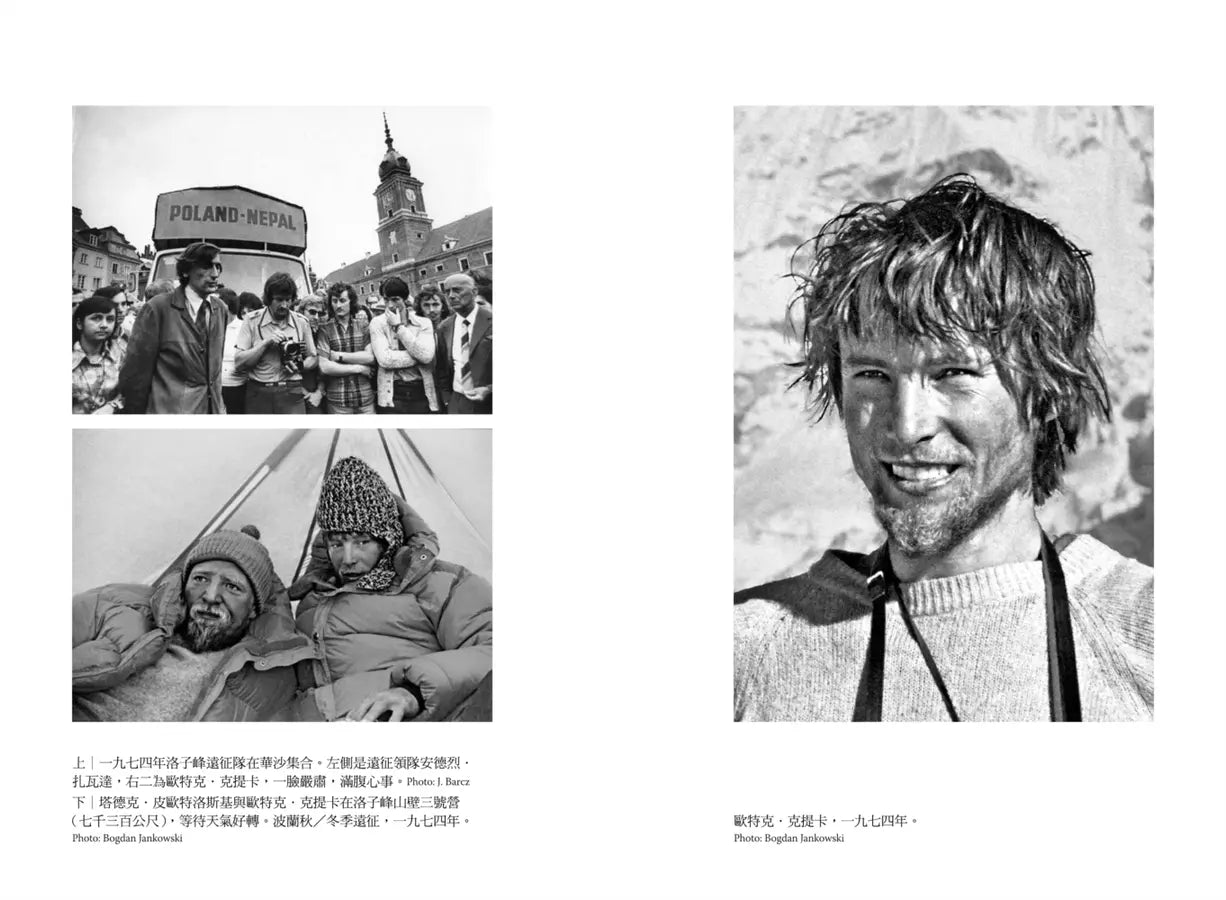
Jerzy Kukuczka (1948-1989)
"In countless hearts, he symbolizes courage and fearlessness." Jerzy Kukuczka not only completed all fourteen 8,000-meter peaks in the world, but ten of them were via new routes, four were winter ascents, and one was a solo ascent, setting an unshakeable world record. Reinhold Messner, the "king" of mountaineering, even called him the "greatest genius in the world." However, he tragically fell 2,000 meters to his death in 1989 while challenging the south face of Lhotse. Poland mourned nationwide, and schools across the country even renamed themselves after him to commemorate this Polish legend.
Led by these three climbers, Polish mountaineers not only bravely challenged the impossible and achieved astonishing feats, but their life stories are also invaluable world heritage, reflecting the politics and mountain culture of that era, and profoundly embodying the essence and spirit of "mountaineering."
▍It was a golden age of legend, but also an iron age of heavy casualties and heroic sacrifices.
But behind Poland's continuous record-breaking achievements, the sacrifices made by climbers severely impacted the Polish mountaineering community. In these decades, eighty percent of elite high-altitude climbers perished on the peaks. With the loss of these climbers, Poland lost many skilled mountaineers. Furthermore, as economic standards improved, the allure of overseas mountaineering diminished, and capitalist consumerism shifted people's desires, changing the face and spirit of the country.
"The magically magnificent golden age eventually ended, and many top climbers passed away. But their legacy, the legendary means by which they accumulated that legacy, still reverberates in the thin air of the world's highest peaks; those who don't wish to climb that high, those unwilling to take such risks, those who cannot achieve such greatness, cannot glimpse its profundity. But they are still there, waiting for those who are destined."
The author of this book, Bernadette McDonald, is a world-renowned mountain literature writer, as well as a mountaineer, filmmaker, and curator. She co-founded the Banff Centre for Arts and Creativity in Canada, where she worked for over two decades, and also served as the director of the internationally acclaimed Banff Mountain Film Festival. Shortly before Wanda's death, she personally invited Wanda to be a guest at the Banff Film Festival. Two years later, while curating a film festival in Katowice, Poland, she met a group of climbers who had forged legends during Poland's golden age, and heard more in-depth stories of their deceased friends, sparking her curiosity about Poland's golden age. Therefore, she decided to personally uncover and record the history of Poland's dominance in Himalayan mountaineering, analyzing the minds of these climbers: what exactly motivated them to defy risks, even sacrificing their lives, to achieve such brilliant records?
After years of extensive interviews and data collection, the book received continuous acclaim upon publication, winning numerous global mountain and nature literature awards, including the highly influential "Boardman Tasker Prize for Mountain Literature." The publication of this Chinese translation will also be the first time this most significant period of world mountaineering history is presented completely and profoundly to Chinese readers.