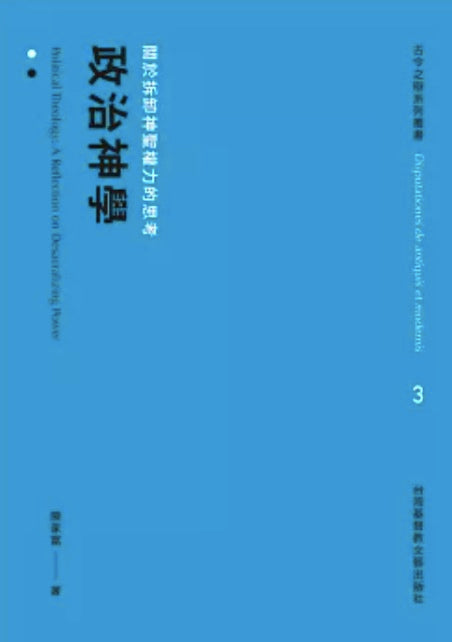

Political Theology: Reflections on the Deconstruction of Sacred Power
Political Theology: Reflections on the Deconstruction of Sacred Power
Couldn't load pickup availability
Political power is a pseudo-sacred right, one that does not require a sacred foundation yet is captivating and difficult to tear apart!
The political landscape of the modern world has gradually shifted towards authoritarianism, nationalism, and other forms of populism, constantly challenging the past values of liberal openness and tolerance. As a result, liberalism and democracy seem to be experiencing a state of fracture, and "sovereignty" appears to have become a sacred and transcendent law-creator, becoming another religion.
This book transcends the discussions of politics and theology within Christian theology and the Christian worldview, focusing instead on the structure of political power and the question of its legitimacy in societies where modern liberalism prevails.
Author Dr. Chan Ka-fu takes the political thought of Italian philosopher Giorgio Agamben as the central theme, tracing the political theological lineage through Schmitt–Benjamin–Taubes; delving into the entanglement between the demystification and re-enchantment of medieval and modern politics as seen in Hobbes and Kantorowicz; and studying Foucault's analysis of modern governmentality, supplemented by a sacred worldly genealogy, to explain that political theology is a discipline that investigates the sacred core at work, questioning the transcendent foundations and legitimacy of power in modern society. Political theology is not concerned with the legitimacy of theology in the political sphere; rather, it continuously examines the theological discourse within political power and attempts to consider how to sever the connection between politics and the sacred.
Political theology contemplates how theology and politics are intertwined in their separation, how to unravel the ties between sacred authority and secular political power amidst their entanglement, how to interrupt the transition between religious symbols and codes and political operations, and how to find a path to escape the pervasive violence of sovereignty.