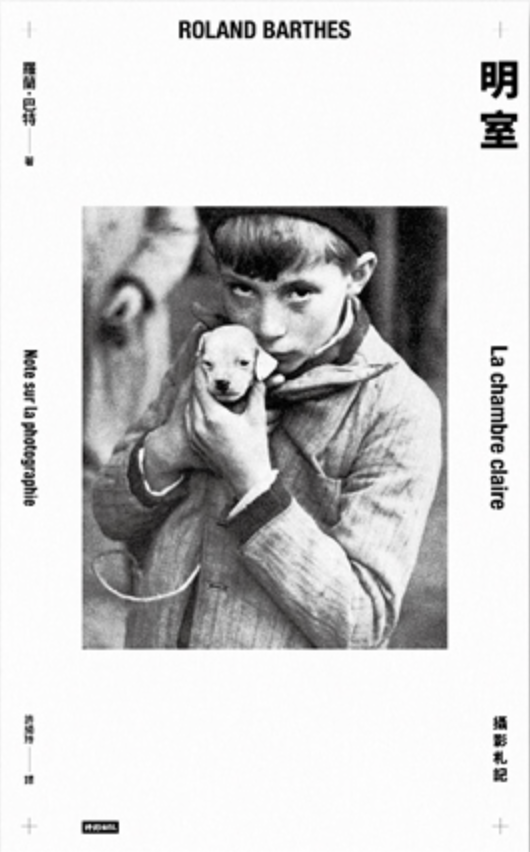

Roland Barthes' classic discourse on photography
The book where concepts like "studium," "punctum," and "that-has-been" originated
Newly authorized · Translated directly from French
The book where concepts like "studium," "punctum," and "that-has-been" originated
Newly authorized · Translated directly from French
《Camera Lucida: Reflections on Photography》 (La chambre claire: Note sur la photographie) is the last book published by Roland Barthes, the French master of literary and analytical essays, during his lifetime. Before writing 《Camera Lucida》, he suffered the grief of losing his mother, and in the spring of the year it was published, he was involved in a car accident and passed away shortly after. Through his writing, Barthes transformed his grief over his mother's death and his pervasive melancholy into an inquiry and reflection on photography. He gazed at and interpreted every photograph in the book, employing phenomenological language to construct his unique theory of photography and way of seeing, proposing a new path for "how to talk about photography."
In 《Camera Lucida》, Barthes explores the essence of photography, first distinguishing between the operator, the spectator, and the subject. He then focuses on the spectator's perspective and, from images he "likes," introduces important concepts such as "studium," "punctum," and "that-has-been" to analyze photography. Barthes chose "camera lucida" (a drawing aid) as the book's title, deliberately inverting common perception by not using the more familiar "camera obscura," because he intended to use this term to emphasize that photography "is the undeniable fact of what has been," and that looking at photographs always involves the illusion of seeing both the image and reality simultaneously.
Although 《Camera Lucida》 is short, its language is refined, its structure rigorous, and its emotions intense. For over forty years since its publication in 1980, despite many discussions and challenges, and even though we are now in the era of digital images, Barthes' profound insights into human civilization through photography remain deeply enlightening. This book truly deserves its status as a classic for studying and reflecting on photography.