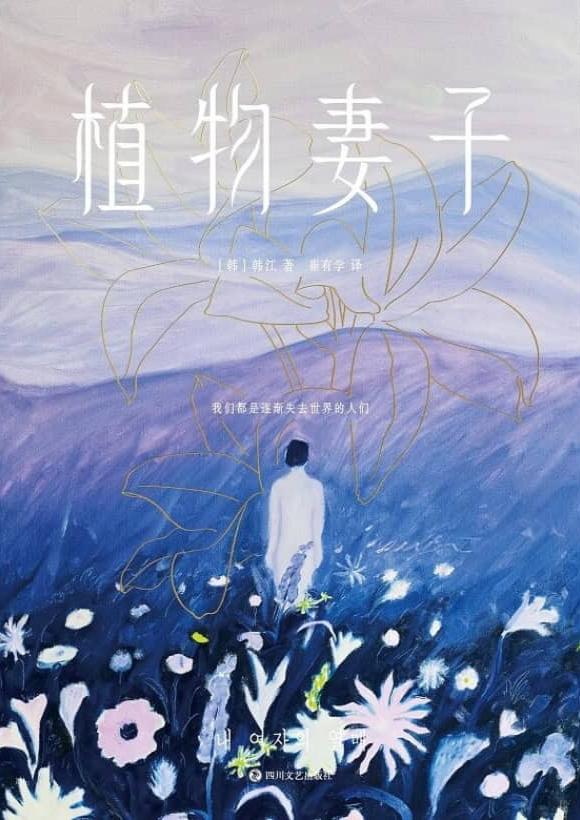

Plant wife
Plant wife
Couldn't load pickup availability
◆ A Nobel Literature Prize perennial contender and the first Asian winner of the International Booker Prize, Han Kang's collection of short stories. Recipient of the Malaparte Prize (Italy), the Saint Clement Literary Prize (Spain), shortlisted for the International Dublin Literary Award, and named annual writer for the Norwegian Future Library project.
As a stalwart of the Korean literary scene, Han Kang is highly likely to become a strong candidate for a contemporary Korean writer to win the Nobel Literature Prize.
— Jean-Marie Gustave Le Clézio, Nobel Literature Prize laureate and leading figure in French literature
◆ Eight times more captivating than "The Vegetarian," winning the Korean Novel Literature Award with only one-eighth of its content.
Flowers and beasts, plants and ironware, blindness and falling, dreams of escape and injured feet, failed love, shattered family affection, and us wandering in a hopeless world.
◆ Carrying a knife in their hearts, yet time and again rescuing themselves from dire situations – the marginalized.
A wife who turns into a plant, a housewife who runs away from home, a girl who resolutely becomes a nun, a mother with a knife in her heart, lovers unable to maintain their affection.
◆ Directly translated from Korean by Professor Cui Youxue of Minzu University of China, with a specially commissioned cover by popular illustrator Lu Mao, and binding design by designer Fu Shiyi, featuring a hardcover with inner and outer covers hot-stamped with laser metallic colors.
This book comprises eight novellas and short stories. Water and fire, softness and sharpness, spring and winter, plants and ironware—Han Kang discerns fleeting sensations and impressions amid these conflicts, portraying the expressions of fate with beautiful and vivid language, and radiating dazzling brilliance while probing the dark side of human relationships. This collection of short stories focuses on the "marginalized," with each protagonist wandering "like an orphan in a hopeless world."
They emerge from hotel rooms in remote towns, from rooms at the end of dormitory corridors, from dark basements, or from the ends of corridors in multi-family dwellings and high-rise apartments. They navigate dark staircases and alleys without streetlights, entering the bustling, exhausting city streets. Yet, even if they leave behind countless weary people and the unfortunate city to live by a remote seaside or in a peripheral port city, they ultimately return to the city; this is their destiny.
Amid the city's noise, pollution, and complex interpersonal relationships, they find no haven or mother to embrace and comfort them. A haven and mother exist only in dreams or on the other side of death. The world they inhabit is a father's world, a world of evil and coldness. It is the real world, filled with snakes, numbers 13 and 4, and icy cold ironware. And it is there that Han Kang's characters will be reborn.