
Between Gospel and Politics
Between Gospel and Politics
Couldn't load pickup availability
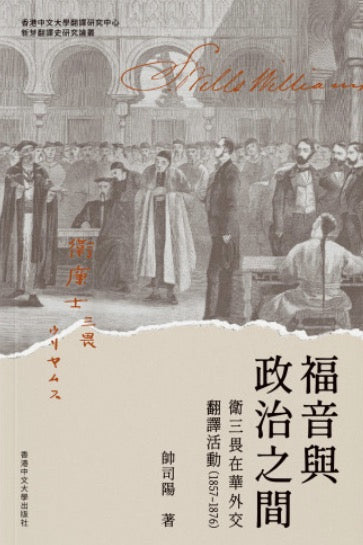
Between 1857 and 1876, S. Wells Williams simultaneously served as a missionary, sinologist, and diplomat. What led this American missionary to eventually become a diplomatic translator in China? How did he balance the propagation of the Gospel with his diplomatic mission, and reconcile the potential conflicts between his personal beliefs and national interests? How did his translation practice reflect and shape his unique diplomatic philosophy concerning China?
Based on the S. Wells Williams family archives, church documents, and primary Chinese and American official historical materials, this book deeply analyzes three key events in which Williams participated: the translation dispute over the "tolerance clauses," the judicial negotiations of the "Burgevine Case," and the cultural mediation surrounding the Qing court's participation in the Philadelphia Centennial Exposition. The study reveals how Williams used diplomatic textual translation strategies to communicate and coordinate among the Qing court, the American legation, and missionary groups in China, and how he practiced his Christian "civilizing" diplomatic philosophy. This book not only re-evaluates the agency of translators in modern diplomatic history but also specifically illustrates how political, religious, and cultural forces in 19th-century Sino-American relations influenced and shaped each other through the medium of "translation."
-------------------------------------------------------------------------------
This book, with its solid historical evidence, unique perspective, and captivating narrative, precisely reconstructs the three pivotal roles of missionary-diplomat S. Wells Williams in the history of Sino-American relations—religious envoy, political interpreter, and cultural mediator—through a wealth of previously unexplored archives. Using three historical events as entry points, the book incisively analyzes how Williams utilized his translation privilege to influence diplomatic processes. It not only showcases the efforts of 19th-century missionary-translators to uphold religious ideals and maintain their perceived "justice" when facing the complexities of secular international politics but also reveals the hidden mechanisms of linguistic power in diplomacy. The research combines the meticulousness of microhistory with the breadth of transnational history, offering profound insights into the intertwining of knowledge, belief, and power in the collision of modern China and the West.
—Gao Xi, Professor, Department of History, Fudan University
This book utilizes a large amount of primary historical materials concerning S. Wells Williams, such as his family archives, the archives of the missionary society he belonged to for over twenty years, and the diplomatic archives of China and the United States during his tenure as an American diplomat in China, to conduct an in-depth and detailed exploration of Williams's diplomatic translation philosophy, experiences, and achievements. The author not only possesses ample and highly credible historical materials but also demonstrates outstanding persuasiveness in their analysis and arguments.
—Su Jing, Professor, Graduate Institute of Sinological Studies and Applied Chinese, National Yunlin University of Science and Technology