
1
/
of
1
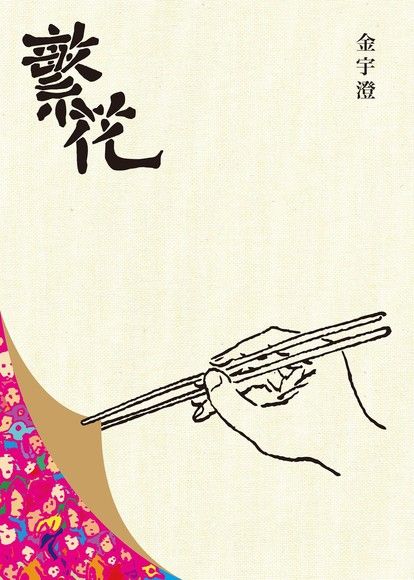
Blossoms
Blossoms
Regular price
MOP$210.00
Regular price
Sale price
MOP$210.00
Unit price
/
per
Couldn't load pickup availability
Newly revised in 2019, ultimate collector's cloth-bound hardcover edition
Includes Jin Yucheng's new preface in traditional Chinese, an exclusive interview with Ke Yufen, and a brand new, exciting character relationship chart.
Twenty illustrations personally drawn by Jin Yucheng
One city, two men, three childhoods, four decades, and endless tales of urban life.
In the 1990s, in Shanghai, a city of businessmen, lawyer Hu Sheng and his wife Bai Ping had a marriage in name only. After they married, Bai Ping tried everything to move abroad, unwilling to return home. Meirei, Hu Sheng's classmate from law night school, first dated Hu Sheng, then hooked up with his good friend, "Boss Bao" A Bao. But A Bao always had the shadow of another girl in his heart.
In the business world, astute women fix their gaze on successful men, especially lonely ones. And behind every lonely man, there was once a special woman. Their story—the story of a city—begins in the 1960s Shanghai, tracing back to the childhood friendship of Hu Sheng, A Bao, and Xiao Mao. It’s filled with beautiful, captivating, involuntary, and desire-filled women, women's bodies, men who crave women and women who crave men; neighborhoods, gossip, rumors, betrayals, legends, heroic deeds, disappointment and hope, tears, and a revolution that changed everyone.
"Blossoms are like tiny, tenacious little flowers, sparkling like small lights on a tree, one lighting up as another dims. That’s the flavor of it." — Jin Yucheng
"This is a deeply respectable novel. Its impact on my inner world is perhaps comparable to what I felt years ago reading 'Empress Dowager & I' in Hong Kong, or re-reading Eileen Chang's 'The Fall of Rayfeng Pagoda' two or three times. It's not just a particular way a novel chooses to view the world, but through 'this time' of a novel, it’s a struggle against the illusion of the world you inhabit." — Luo Yijun
"Shanghai literature and literature about Shanghai have been feminine since Eileen Chang, but Jin Yucheng's 'Blossoms' is full of hormonal sex appeal, not crude, but the sex appeal of Shanghai men." — Wong Kar-wai
"Blossoms" originated as a tribute to a great city, with Jin Yucheng wanting to write down the Shanghai stories of two generations, including what could be told and what was "unspoken." The narrative time spans Shanghai from the 1960s to the 1990s. One narrative thread covers the period from 1960 to the end of the Cultural Revolution, while the other runs from 1980 to the early 21st century. Through the experiences of three childhood friends, it portrays the true essence of Shanghai's urban life, depicting its joys and sorrows like a flowing banquet. With its dense prose, exquisite details, and superb storytelling, "Blossoms" is lauded as a successor to Eileen Chang and Wang Anyi's Shanghai narratives, not only recreating a contemporary "Along the River During the Qingming Festival" unique to Shanghai but also resembling a modern "Dream of the Red Chamber" chronicling the destinies of Shanghai men and women.
View full details
Includes Jin Yucheng's new preface in traditional Chinese, an exclusive interview with Ke Yufen, and a brand new, exciting character relationship chart.
Twenty illustrations personally drawn by Jin Yucheng
One city, two men, three childhoods, four decades, and endless tales of urban life.
In the 1990s, in Shanghai, a city of businessmen, lawyer Hu Sheng and his wife Bai Ping had a marriage in name only. After they married, Bai Ping tried everything to move abroad, unwilling to return home. Meirei, Hu Sheng's classmate from law night school, first dated Hu Sheng, then hooked up with his good friend, "Boss Bao" A Bao. But A Bao always had the shadow of another girl in his heart.
In the business world, astute women fix their gaze on successful men, especially lonely ones. And behind every lonely man, there was once a special woman. Their story—the story of a city—begins in the 1960s Shanghai, tracing back to the childhood friendship of Hu Sheng, A Bao, and Xiao Mao. It’s filled with beautiful, captivating, involuntary, and desire-filled women, women's bodies, men who crave women and women who crave men; neighborhoods, gossip, rumors, betrayals, legends, heroic deeds, disappointment and hope, tears, and a revolution that changed everyone.
"Blossoms are like tiny, tenacious little flowers, sparkling like small lights on a tree, one lighting up as another dims. That’s the flavor of it." — Jin Yucheng
"This is a deeply respectable novel. Its impact on my inner world is perhaps comparable to what I felt years ago reading 'Empress Dowager & I' in Hong Kong, or re-reading Eileen Chang's 'The Fall of Rayfeng Pagoda' two or three times. It's not just a particular way a novel chooses to view the world, but through 'this time' of a novel, it’s a struggle against the illusion of the world you inhabit." — Luo Yijun
"Shanghai literature and literature about Shanghai have been feminine since Eileen Chang, but Jin Yucheng's 'Blossoms' is full of hormonal sex appeal, not crude, but the sex appeal of Shanghai men." — Wong Kar-wai
"Blossoms" originated as a tribute to a great city, with Jin Yucheng wanting to write down the Shanghai stories of two generations, including what could be told and what was "unspoken." The narrative time spans Shanghai from the 1960s to the 1990s. One narrative thread covers the period from 1960 to the end of the Cultural Revolution, while the other runs from 1980 to the early 21st century. Through the experiences of three childhood friends, it portrays the true essence of Shanghai's urban life, depicting its joys and sorrows like a flowing banquet. With its dense prose, exquisite details, and superb storytelling, "Blossoms" is lauded as a successor to Eileen Chang and Wang Anyi's Shanghai narratives, not only recreating a contemporary "Along the River During the Qingming Festival" unique to Shanghai but also resembling a modern "Dream of the Red Chamber" chronicling the destinies of Shanghai men and women.