

Traveling in Taiwan
Traveling in Taiwan
Couldn't load pickup availability
First Taiwanese Literary Work to Win
2024 National Book Award for Translated Literature (US)
2024 Japan Translation Award
2021 Taiwan Golden Tripod Award for Literary Books
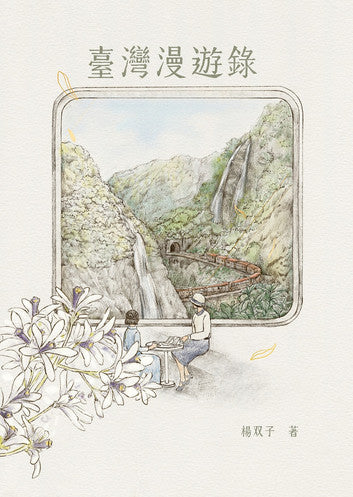
Showa Era Taiwan Traverse Railway Gourmet Tour
Yang Shuang-tzu's "Wandering in Taiwan" Beautifully Released
"Let's eat our way across Taiwan together!" ――Chizuko Aoyama (Japanese Kyushu novelist)
"In this world, there is no hotter potato more difficult to refuse than well-intentioned arrogance." ――Aizo Mishima (Staff member of Taichung City Hall, Taiwan Governor-General's Office)
"I'll only say this once, listen closely. I don't cook for Japanese people." ――Master Aben (Legendary female head chef from Zhangzhou)
"The war between the Empire and China has progressed to this point──alas, perhaps the Taiwan of the future will not need translators." ――Wang Qian-he (Public school Japanese language teacher)
From melon seeds, rice noodles, and jute leaf soup to sashimi, sukiyaki, and then to savory cake and honey bean ice, the novel is like a feast, chronicling Chizuko Aoyama's year-long journey through Taiwan's four seasons within this banquet. It features Taiwanese snacks, elaborate Japanese dishes, and even diverse culinary traditions, such as curry, whose flavors transform upon entering the island. Amidst the dishes served in succession, this "master chef" of a novelist subtly incorporates a few flavors—the indescribable tastes that emerge when people from different life cultures and backgrounds experience a dissimilation of palates.
In the 13th year of Showa (1938), Chizuko Aoyama's semi-autobiographical novel "Seishunki" was adapted into a film and released in Taiwan. Promoted by the women's group Nisshinkai, it received an enthusiastic response, leading to an invitation for Aoyama to tour Taiwan for lectures. Chizuko Aoyama, from a wealthy family, was sent to be raised by a branch family in Nagasaki after her mother's early death. During her stay in Taichung, Nisshinkai recommended Wang Qian-he, a woman from a prominent Taiwanese family, to serve as her interpreter. Growing up with entirely different cultural upbringings, the two women had the opportunity to travel together along the cities of the longitudinal railway. They stayed at the Taipei Railway Hotel, the Tainan Railway Hotel, and even extended their journey by taking sugar railways and local branch lines, enjoying the scenery of various towns. At each stop, they ate wherever they went—street vendors, dagashi stores (traditional Japanese candy shops), traditional grocery stores, coffee shops, or Western restaurants, eateries, and hotels. This culinary journey along the longitudinal railway was truly a rare opportunity, a moment of freedom crystallized in time for these two women before their marriages. Beyond satisfying their taste buds, they exchanged cultures and ideas. Chizuko Aoyama learned that Wang Qian-he, a former public school teacher, harbored a dream of becoming a translator. Perhaps out of a shared sense of womanhood, Chizuko Aoyama understood the immense difficulty for women to have independent careers, especially since Wang Qian-he lacked a strong background and family support. Thus, the idea of offering her assistance sparked within Aoyama.
However, the severity of the war was increasingly approaching... Would they be able to achieve their desired destinies as they wished?
Through meticulous historical research, intricate plots, and vivid character portrayal, novelist Yang Shuang-tzu uses food as a metaphor, allowing us to glimpse the contradictions in the Japanese Empire's treatment of colonial Taiwan, the distinctions between Japanese mainlanders and native Taiwanese, and even the disparity in destinies between men and women of that era. It highlights the numerous difficulties and challenges faced by women who, as independent individuals, sought to possess independent professional identities and thoughts.