Freedom of Speech
Freedom of Speech
Couldn't load pickup availability
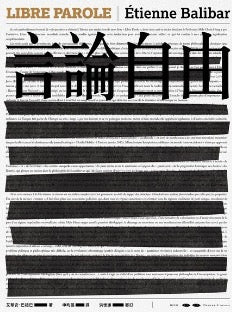
In recent years, issues such as "infiltration," "cognitive warfare," and "anti-war" have repeatedly stirred up public opinion storms in Taiwan, all revolving around a core question – freedom of speech. However, as various voices become polarized and attack each other, the space for genuine criticism and reflection is gradually being compressed. "Censorship" is quietly changing public discourse. Balibar's Freedom of Speech breaks through rhetorical frameworks, re-examining the true meanings of freedom, democracy, and social justice from a different perspective.
Freedom of expression is the prerequisite for all rights to be realized.
Only through freedom of expression can citizens actively participate in politics,
express their needs and opinions, and resist any power.
— Professor Hong Shih-chien, Department of Philosophy, National Sun Yat-sen University
Freedom of Speech is primarily composed of three essays that explore the current democratic predicament and the tense relationship with freedom of speech, all centered around the "Charlie Hebdo incident" in 2015. This event sparked intense debate on religious blasphemy, media censorship, and freedom of speech. Balibar, as a French citizen, chose to challenge the mainstream stance. He believes that only by truly implementing freedom of speech can various opinions in society engage in dialogue, preventing further social division.
Contemporary freedom of speech faces at least two inherent dilemmas. First, in the wave of increasing depoliticization of political correctness due to the advocacy of diverse values, various values can claim to be part of diverse values and thus enjoy freedom of speech. Therefore, when facing issues such as gender, race, and class, we cannot determine whether certain discriminatory speech or even structurally violent systems should be prohibited, because if certain speech is prohibited, can freedom of speech still be called freedom of speech, and can such a country still claim to be a democratic country? Second, in the post-truth era, massive amounts of information, generative AI, etc., make it difficult to distinguish truth from falsehood, and even what truth is becomes difficult to discuss. When we cannot determine what is misinformation or what can be considered cognitive warfare, can we prohibit certain sources of information or the speech of certain groups? However, can a country that prohibits the dissemination of information still claim to be a democratic country that guarantees freedom of speech?
In Taiwan in recent years, issues such as "infiltration," "cognitive warfare," and "anti-war" have repeatedly stirred up public opinion storms, all revolving around a core question – freedom of speech. However, as various voices become polarized and attack each other, the space for genuine criticism and reflection is gradually being compressed. "Censorship" is quietly changing public discourse. Balibar's Freedom of Speech not only challenges traditional freedom of speech but also guides readers to consider how to construct "the interests of public exchange," ensuring that free speech becomes a true social asset. It also offers profound reflection and different perspectives, encouraging people to reclaim the space for dialogue and pursue the true values of a democratic society.
