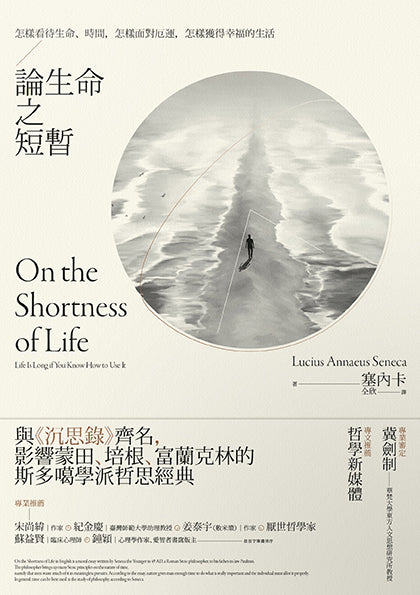

On the Shortness of Life: How to View Life and Time, How to Face Misfortune, and How to Achieve a Happy Life
On the Shortness of Life: How to View Life and Time, How to Face Misfortune, and How to Achieve a Happy Life
Couldn't load pickup availability
Who is Seneca? The most interesting Stoic scholar in the world!
—The Daily Stoic
On par with Meditations,
A classic of Stoic philosophy that influenced Montaigne, Bacon, and Franklin
Life is not short; we just waste too much of it!
How can we live a valuable life?
How should we view life and time, and how should we face adversity?
What is true "leisure," and how can we attain it?
When your heart is restless, open Seneca's "philosophical clinic"!
"On the Shortness of Life" De Brevitate Vitae
One day he will live for himself—
Octavian, the revered founder of the Roman Empire, was undoubtedly a darling of fate. Yet, throughout his life, he never ceased to crave leisure, seeking moments of peace amidst his burdensome public duties. He enjoyed comforting himself with this false but sweet illusion, which allowed him to willingly toil—though they could lead lives happier than ordinary mortals, they despised their own existence.
"On Tranquility of Mind" De Tranquilitate Animi
If we only want others to see our good side, we can never be carefree—
Another important cause of anxiety is being too concerned about one's public image, unwilling to reveal one's true self to anyone, living a hypocritical life like most people, as if life were merely a performance. If a person always has to be cautious in word and deed, fearing that their mask might slip and expose their true face, then they will undoubtedly suffer immensely.
"On Providence" De Providentia
Those who have never experienced misfortune are the most unfortunate, for they have no opportunity to test themselves—
Whether they are mediocre people who enjoy base pleasures or great individuals, they may all be favored by good fortune, but only great individuals can overcome disaster and fear. Those who have always lived in good fortune, never experiencing any mental suffering, can at most only have a superficial understanding of nature.
"On Leisure" De Otio
Learning to be at peace with oneself makes us better people—
We always rely on others' judgments, not caring what should be pursued and advocated, only what others pursue and advocate; what others want is always the best. When choosing a path in life, we don't look at the path itself, but at the footprints left by others, unaware that no pair of footprints can return.
"On the Happy Life" De Vita Beata
Pleasure should not be a leader, but a companion to reasonable desires—
The happiest moments often come just as happiness fades. The space for happiness is small, easily filled, and quickly exhausted; it becomes spent after one assault. Things that come and go quickly, destined to vanish when they have served their purpose, cannot possess any substance, for the end is visible from the beginning, and achieving a goal signals its termination.