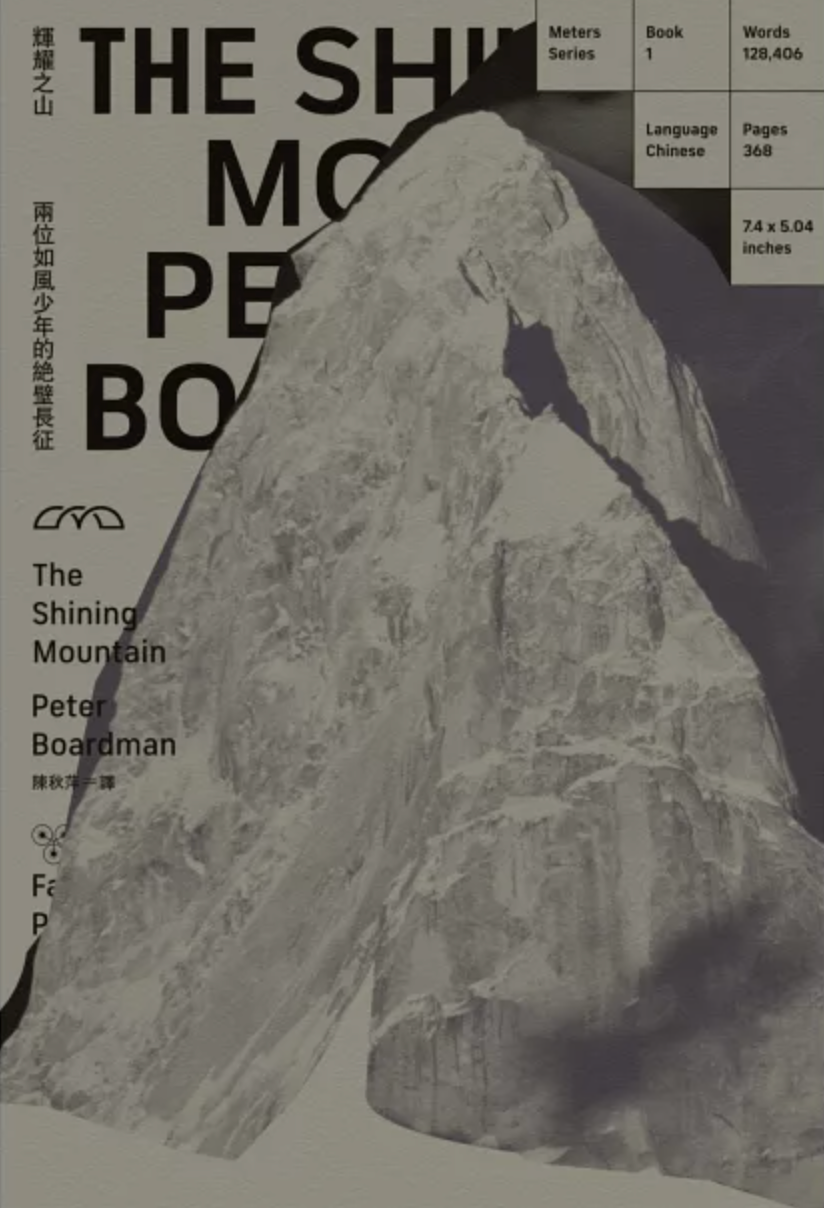


The Mountain of Glory: The Long March of Two Boys Like the Wind
The Mountain of Glory: The Long March of Two Boys Like the Wind
Couldn't load pickup availability
|Planned, Curated, and Introduced by Chan Wai-Hung — The first works in the new meters mountain literature series from Faces Publishing in 2020|
"The Shining Mountain is a mountain literature about youth, and quite possibly, the most captivating mountain literature." — Chan Wai-Hung
The most legendary climbing duo in world mountaineering history, Peter Boardman & Joe Tasker
Their most representative ascent, opening a new dimension in human climbing.
A pioneering masterpiece that influenced world mountain literature, published for the first time in the Chinese world 42 years after its release.
▋The first collaboration between two of the most renowned up-and-coming climbers of their time, marking the beginning of a legendary partnership in mountaineering history.
In 1975, at the age of 25, Peter Boardman, as the youngest member, joined Chris Bonington's large expedition to Mount Everest. He became one of the four survivors who summitted and returned, gaining widespread renown in the climbing world. Almost simultaneously, Joe Tasker successfully conquered Dunagiri Peak in India in a lightweight two-person style, narrowly escaping disaster. For Peter, compared to the large Everest expedition with over a hundred people, Joe's adventurous and uncertain two-person lightweight ascent was even more admirable. Unexpectedly, shortly after returning home, Joe invited Peter to join him back in the Himalayas to climb the west face of Changabang, known as "The Shining Mountain." "This was the climb I had longed for," Peter readily accepted the invitation, thus initiating a legendary partnership that would become iconic in mountaineering history.
▋A milestone that pioneered contemporary climbing styles, shifting mountaineering from collectivism to individualism.
"This plan is too absurd. However, if you actually go through with it, I believe it will be the most difficult thing anyone has ever done in the Himalayas."
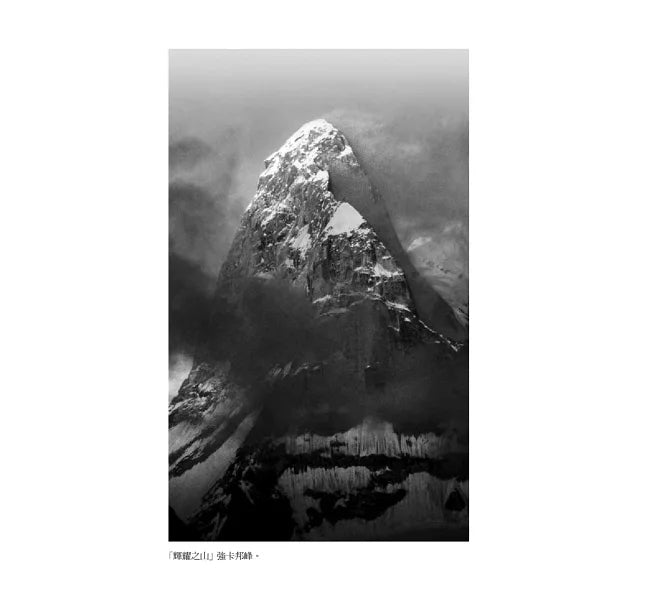
This was Chris Bonington's response after Peter and Joe told the famous British mountaineer about their plan to attempt the west face of Changabang with just the two of them in a lightweight style. The west face of Changabang, a nearly vertical granite wall rising 5520 feet, with a mix of ice, snow, and rock terrain, presented technical difficulties surpassing Mount Everest. It was considered one of the most formidable and technically challenging faces in the Himalayas. At the time, most people believed that climbing the west face of Changabang was impossible, let alone a lightweight expedition with only two people.
Facing such a high-difficulty rock face, the mainstream climbing style at the time involved large expeditions with many people, significant resources, and often national support (also known as "Himalayan-style climbing"). In contrast, "Alpine-style climbing," conducted with a small number of people in a lightweight manner, carried limited equipment and no backup, thus multiplying the difficulty. But tempted by the challenge and the desire to align his self-identity with public recognition, Peter accepted Joe's invitation. Together, they ventured to that treacherous yet beautiful peak, ultimately achieving this legendary ascent and laying the foundation for a crucial shift in contemporary mountaineering history from collectivism to individualism.
▋A pioneering masterpiece that brought literary quality, poetry, and intensely personal sensibility to mountain literature.
This work, personally written by Peter after his successful ascent and return from Changabang, fully documents the entire process: from adapting to the environment and preparing for departure, to the challenges they faced technically and mentally during 40 days of isolated climbing on the west face of Changabang, the interactions and tensions between the two, and the intricate moments along the way, all the way to their insights after finally reaching the summit, all honestly shared in the book. What sets this work apart from previous mountain literature is that the author abandons the previous emphasis on technical details and achievements. Instead, he uses more poetic and literary language to describe his observations along the journey and frankly reveals his extremely personal feelings and thoughts, allowing readers to experience and empathize with the story more profoundly.
Upon its publication in 1978, this book garnered a widespread response, and the following year, it won the John Llewelyn Rhys Memorial Prize, traditionally awarded to pure literary English writers (including Nobel laureate V.S. Naipaul). It thus became a pioneering masterpiece that launched the genre of mountain literature, enduring to this day.
In May 1982, Peter and Joe joined Bonington's Everest expedition, attempting the challenging first ascent of the northeast ridge, but both disappeared near the summit. It wasn't until 1992 that a Japanese-Russian expedition discovered Peter's remains. To commemorate their contributions to mountaineering and mountain literature, their friends and family established "The Boardman Tasker Award for Mountain Literature" in 1983. Awarded annually to outstanding mountain and nature literature and non-fiction works, this prize has gradually gained a distinguished reputation, fostering a new wave of interest in mountain literature.