
Stamp
Stamp
Couldn't load pickup availability
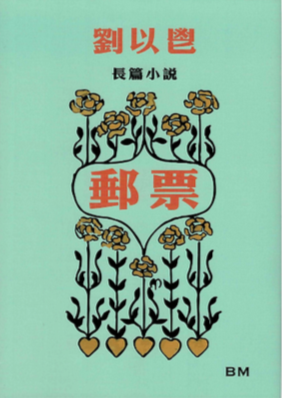
Liu Yichang was a giant of modern Hong Kong literature. He edited numerous literary journals and magazines in mainland China, Hong Kong, and Malaya, and tirelessly wrote and translated for over six decades, publishing tens of millions of words that were both "entertaining to others" and "entertaining to himself." Twelve unique large anthologies of his selected works are still in existence. He also had a lifelong passion for stamp collecting, appreciating ceramics, and building models, which he used to enrich his life. He even used these hobbies as subjects to depict the diverse aspects of the mundane world, enriching the treasure trove of Hong Kong literature.
The Stamp, following The Ceramic (reported in newspapers in 1971 and collected in 1979), is another lengthy novel that describes how desire manipulates human nature, causing it to fluctuate repeatedly. The full text, over 500,000 words, was first published in Ming Pao Evening News from 1971 to 1973, making it Mr. Liu's longest novel, and is now published as a book for the first time. The author was meticulous in everything he did, making good use of his time and intellect, pushing his amateur interests to an extreme, achieving expert-level proficiency, and then committing them to writing. This serves as an excellent example for aspiring young talents who love literature.
— Mei Zi
We know the author loved stamp collecting, but it was only after reading The Stamp that we understood it was an obsession. The detailed philatelic information, the operations and trends of the stamp markets in Hong Kong and elsewhere, and the schemes of collectors and dealers all provided the novel with a distinct sense of reality, quite different from works like The Drunkard and Tête-bêche. Most amusingly, the protagonists' attitudes towards stamps and stocks shift and intertwine, dramatically preserving the flavor of Hong Kong in the 1970s.
The Stamp is also a book of desire. The protagonist eloquently argues for his collecting desire with various reasons: a noble hobby, a stable investment... but as the plot develops, these arguments fall apart on their own. In the end, he realizes, "When I see stamps, I cannot maintain a clear mind." The essence of desire can only be desire itself; if it can be measured by taste or profit, it is not true desire. The novel seems to end somewhat abruptly, perhaps due to a change in the journal's format or an instruction from the boss, but desire can never be fully satisfied. Isn't this incompleteness precisely the ideal ending for The Stamp?
Whether viewed as one of Liu Yichang's novels or as a newspaper serial in Hong Kong, The Stamp is an exceptional work that should not be forgotten.
The publication of The Stamp as a book offers today's readers a new perspective on how Liu Yichang pursued uniqueness, and also provides a glimpse into the broad inclusiveness of Hong Kong's literary supplement culture during its heyday.
— Fan Shin-piu