
Why is art so sad?
Why is art so sad?
Couldn't load pickup availability
Gazing at the desolate figures in artworks:
Music, Literature, Drama, Opera, Painting…
True art emerges when we awaken and feel pain.
True art should "be like an axe for the frozen sea within us"
—Franz Kafka
Only art created under the most difficult circumstances can leave the deepest impression.
—Franz Schubert
Subdividing art fields will make art more commercial, ultimately leading to its degradation.
—Richard Wagner
Many people do not realize that art often tells the stories of the unfortunate, lonely, and incomplete. Most protagonists in music, literature, drama, opera, and painting belong to vulnerable groups. Take opera, seemingly the most glamorous art form, as an example: the heroine of Madama Butterfly was married at fifteen and soon abandoned; the heroine of Carmen was a wandering gypsy with no home; the heroine of La Traviata was a courtesan; and the protagonist of Rigoletto was a hunchbacked person with a disability.
Art should serve to awaken those who fail to recognize the wrongs in society. We should feel uneasy when confronting art. Music that fails to touch the soul but merely pleases the ears is not true art; it is simply sound that vibrates the eardrums. Paintings that fail to stir the spirit but merely satisfy the eyes are not true art; they are simply images that merely reach the retina. Facing things that displease you, though painful, will lead to growth through the hurt. With pain comes understanding; with understanding comes compassion; with compassion comes love.
This book surveys masterpieces across various art forms, selecting key themes embedded within them as its warp and weft. It explores how the figures of various vulnerable groups repeatedly appear in renowned artworks, seen through different perspectives and forms. The thoughts and lives of the artists, often more dramatic than their art itself, are also compared and discussed.
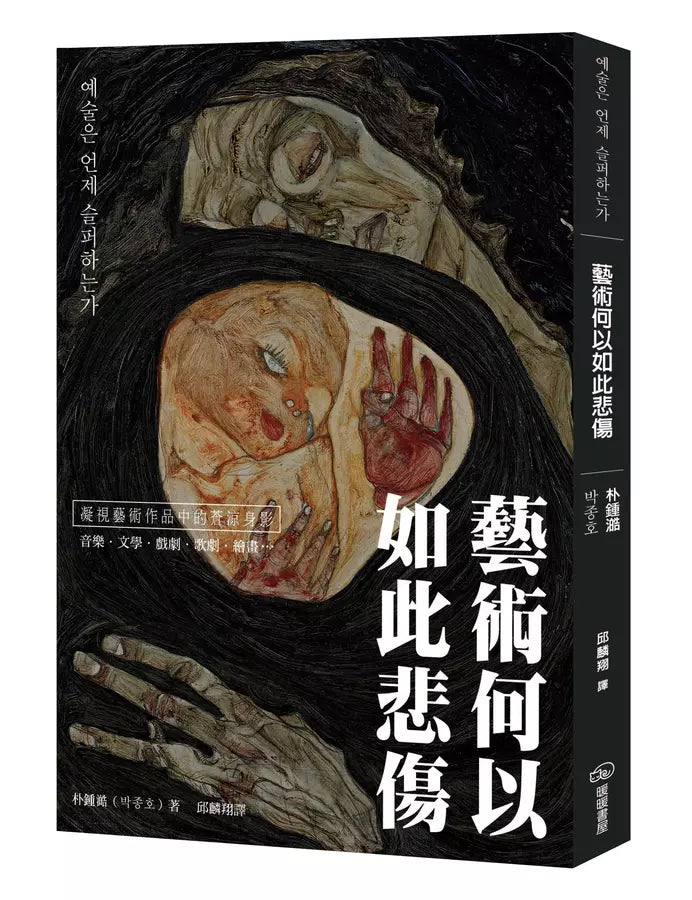
◎Cover image description:
Dead Mother (1910) by Egon Schiele (1890-1918), an Austrian Expressionist painter whose works revolve around themes of eroticism, death, and portraiture. His distorted lines and figures evoke feelings of painful struggle and anxiety. He and his six-months-pregnant wife both died in the 1918 Spanish Flu pandemic, at the age of 28.