
1
/
of
1
The How to be British Collection
The How to be British Collection
Regular price
MOP$142.00
Regular price
Sale price
MOP$142.00
Unit price
/
per
Couldn't load pickup availability
A timeless collection of full-colour cartoons with accompanying text that expose the lovable peculiarities of English life. Drawing on years of experience teaching English as a foreign language, the authors provide a hilariously irreverent guide to conversing in English whilst understanding our 'eccentricities'. The tone is gently satirical, although occasionally some sharp barbs are aimed at bland food, fashion disasters or questionable hygiene standards, but the mood of How to be British is more nostalgic than disparaging and its pet-loving, royalty-observing, tea-drinking characters are treated with an ironic affection.
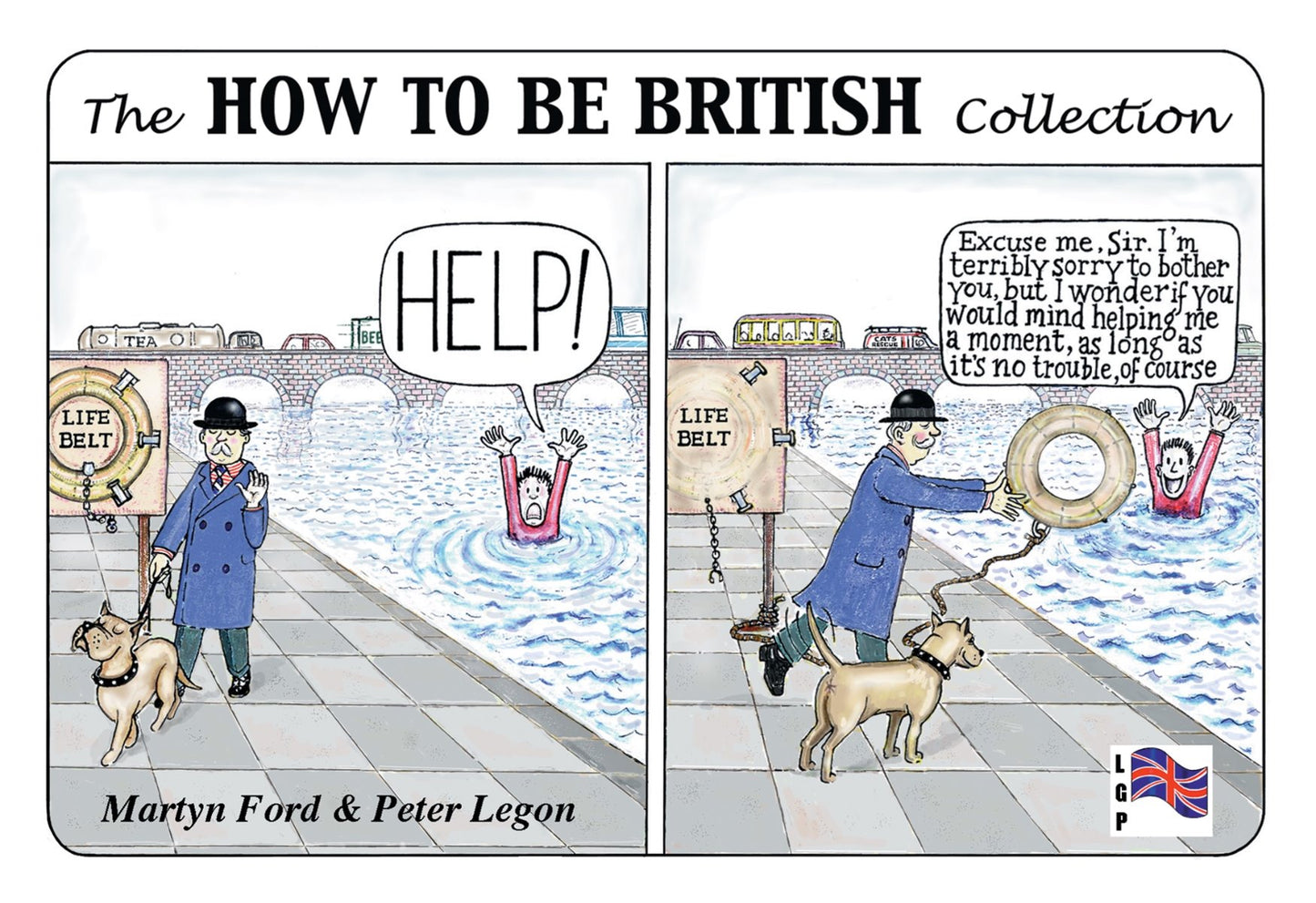
Cartoons such as How to be Polite and How to Complain are reproduced in publications all over the world, perhaps because they capture so exactly what foreigners find so baffling, and often so amusing, about our quirky hesitancy. To be British, or at least to go unnoticed in British society, the visitor must learn not to 'make a fuss'. Real British people can't stand a fuss. It's almost as bad as being 'noisy', and is in the same league as 'drawing attention to yourself'. In the first frame of How to be Polite, a man – presumably an overseas visitor unfamiliar with British etiquette – has fallen into a river. He's clearly in trouble, and shouts 'Help!' – loudly, judging from the speech bubble. A British gentleman is walking his dog along the riverbank. A lifebelt is prominently placed next to them, but the gentleman and his dog walk on, looking disapproving. In the next frame, the man in the river changes his tactics, shouting: 'Excuse me, Sir. I am awfully sorry to trouble you, but I was wondering if you would mind terribly helping me, that is, if it's no bother…'. This time, the British gentleman naturally rushes to help, throwing the lifebelt into the water. Even the dog is smiling.
Much of How to be British explores how cultural differences can be a minefield for the unwary. In an age when many of us love to travel, and even make our homes abroad, the appeal of this book is universal. Every visitor to Britain knows that our favourite topic of conversation is the weather. But how many can successfully do it at beginner, intermediate, and advanced level? The enduring appeal of this book comes from its perceptiveness – how glaringly different we become, once we step outside the comfort zone of our native tongue.
One unfortunate visitor, clutching a phrasebook, stops an old lady in the street to ask directions. He seems rather pleased with himself for having asked the question so elegantly, but then completely fails to understand the old lady's long, rambling, comprehensive answer. We've all been there. To help those poor, benighted overseas folk navigate such cultural and linguistic pitfalls, most pages include expressions to learn, and of course, expressions to avoid. So under the heading 'Real English' we find – Expressions to Learn: 'He pinched it off a lorry and now the fuzz have done him.'
Expressions to Avoid: 'That's not correct English, Mrs Jones – my grammar book says so.'